
The Fruit of the Spirit
A Deep Bible Study of Galatians 5:22–23
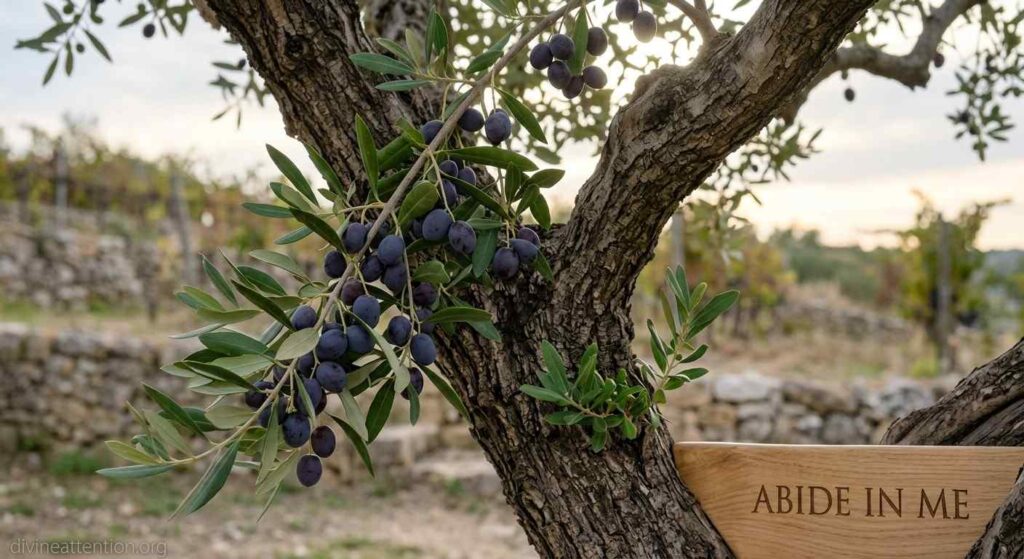
What does it actually look like when the Holy Spirit is at work in a life? Not the gifts – the fruit. The nine qualities listed in Galatians 5:22-23 are not a checklist of Christian behaviours to perform. They are the natural overflow of a life genuinely yielded to the Holy Spirit. This study will show you what each fruit really means, why it matters, and how it actually grows.
Galatians 5:22–23 · John 15:4–5 · Romans 8:29 · 2 Peter 1:5–8 · Galatians 5:16
| “But the fruit of the Spirit is love, joy, peace, forbearance, kindness, goodness, faithfulness, gentleness and self-control. Against such things there is no law.” Galatians 5:22–23 (NIV) |
Paul’s letter to the Galatians is his most passionate defence of the gospel of grace. And in chapter 5, after establishing that the believer lives not under law but under the Spirit, he presents two contrasting lists: the works of the flesh (vv.19–21) and the fruit of the Spirit (vv.22–23). The contrast is deliberate and instructive. The works of the flesh are plural – many disconnected acts of a nature oriented away from God. The fruit of the Spirit is singular – one fruit with nine dimensions, the organic expression of a single life-source.
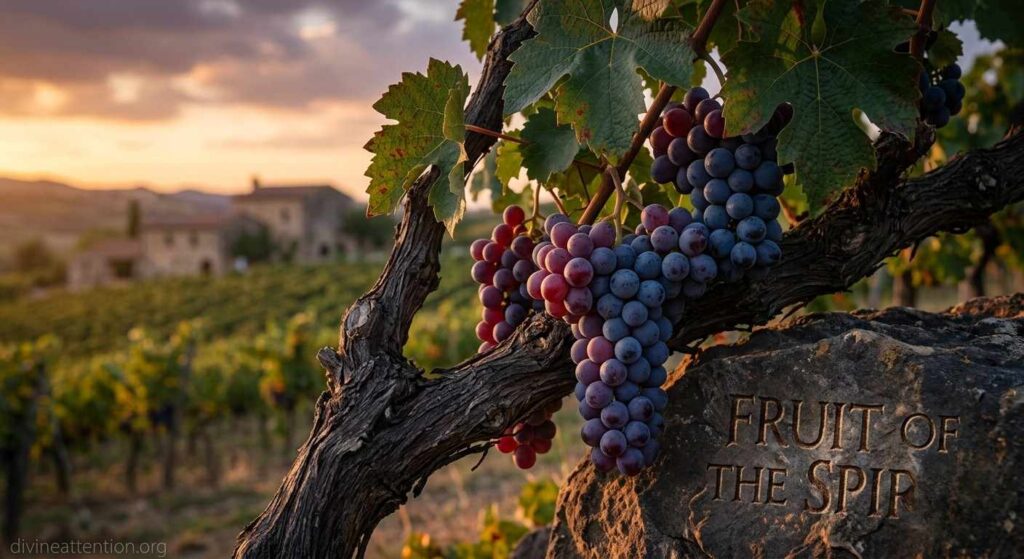
The most important word in this passage is fruit. Paul does not say the gifts of the Spirit. He does not say the disciplines of the Spirit. He says fruit. Fruit is not manufactured. Fruit is not achieved through effort and religious performance. Fruit grows. It grows from the inside out. It grows as the natural expression of a healthy root system connected to a living source. And the source, in Galatians 5, is the Holy Spirit Himself.
John 15:4‑5 makes this connection explicit. Jesus says: “Remain in Me, as I also remain in you. No branch can bear fruit by itself; it must remain in the vine. Neither can you bear fruit unless you remain in Me. I am the vine; you are the branches. If you remain in Me and I in you, you will bear much fruit; apart from Me you can do nothing.” The fruit is not produced by trying harder. It is produced by abiding deeper. The believer’s assignment is not to manufacture the fruit. It is to maintain the connection that produces it.
This study will take you through each of the nine dimensions of the fruit of the Spirit, show you what each one means in its original Greek context, and give you the practical understanding of how each one is cultivated in the life of the believer who is genuinely walking with the Holy Spirit.
| WHAT THIS BIBLE STUDY COVERS 1. Key Bible Verses on the Fruit of the Spirit 2. The Difference Between Gifts and Fruit 3. Part 1 – Love – The Foundation of All the Fruit 4. Part 2 – Joy – The Strength of the Spirit-Filled Life 5. Part 3 – Peace – The Guard That Surpasses Understanding 6. Part 4 – Patience (Forbearance) – The Long Fuse of Love 7. Part 5 – Kindness and Goodness – The Active and Passive Dimensions of Love 8. Part 6 – Faithfulness – Trustworthy in Every Season 9. Part 7 – Gentleness – Strength Under Control 10. Part 8 – Self-Control – The Master of Every Appetite 11. How the Fruit Grows – 3 Biblical Principles 12. Discussion Questions 13. Declaration of the Spirit-Filled Life |
How to use this study: Walk through one fruit per day over nine days or use it as a nine-week small group study on character formation. Each section can also stand alone as a standalone devotional on that specific fruit. This study is especially powerful for new believers establishing their understanding of Spirit-filled living, for leadership development courses, and for any believer who feels their spiritual character is not matching their spiritual knowledge.
The Difference Between the Gifts and the Fruit of the Spirit
Before entering the study of each fruit, one crucial distinction must be established: the difference between the gifts of the Spirit and the fruit of the Spirit. Confusing these two produces both theological error and personal frustration.
The gifts of the Spirit (1 Corinthians 12) are given by the Spirit as He determines (v.11) – sovereignly, selectively, and for the purpose of building the body of Christ. They are not earned and they are not evidence of spiritual maturity. A person can operate in gifts while lacking fruit, as 1 Corinthians 13:1–3 demonstrates starkly: a person can speak in tongues, prophesy, have all knowledge, move mountains by faith, and give everything they own – and if they have no love, they gain nothing.
The fruit of the Spirit is not selective or sovereign in the same way. It is the expected, normal outcome of every believer who is genuinely walking in the Spirit. Every believer is called to bear all nine dimensions of the fruit – not just the ones that come naturally to their personality. The fruit is the evidence of genuine discipleship in a way the gifts alone are not.
| THE KEY PRINCIPLE: You can have gifts without fruit. You cannot have genuine fruit without the Spirit. Gifts reveal what the Spirit can do through a person. Fruit reveals what the Spirit has done in a person. The gifts serve the body. The fruit transforms the person. Both are necessary. But if you must prioritise one, 1 Corinthians 13 and Galatians 5 consistently prioritise the fruit. |
Love (Agape) – The Foundation of All the Fruit
The Greek word for love in Galatians 5:22 is agape – the same word used in John 3:16 and 1 Corinthians 13. It is not eros (romantic love) or phileo (friendship love). Agape is love as a decision and a commitment, not a feeling. It is the love that gives regardless of the worthiness of the recipient, that serves regardless of the cost, and that persists regardless of the response it receives.
1 John 4:8 says God is love – not merely that God has love or demonstrates love but that love is His fundamental nature. The fruit of agape in the believer is the direct consequence of the Holy Spirit – who is the Spirit of the God who is love – dwelling within and producing His own nature in the person He indwells.
Why Love Comes First
Love is listed first among the nine dimensions of the fruit and this positioning is not accidental. Romans 5:5 reveals why: God’s love has been poured out into our hearts through the Holy Spirit. Love is the root from which every other dimension of the fruit grows. Joy is love celebrating. Peace is love resting. Patience is love enduring. Kindness is love reaching out. Goodness is love with moral consistency. Faithfulness is love persisting. Gentleness is love responding softly. Self-control is love governing the appetites. Everything begins with agape.
Joy (Chara) – The Strength of the Spirit-Filled Life
The Greek word chara means joy, gladness, delight. It appears 59 times in the New Testament and is consistently distinguished from happiness. Happiness is circumstance-dependent – it fluctuates with what is happening around you. Joy is Spirit-rooted – it persists through circumstances that would ordinarily destroy happiness.
Nehemiah 8:10 declares: the joy of the Lord is your strength. This statement reveals the functional role of joy in the believer’s life. Joy is not an optional emotional bonus. It is a source of spiritual and physical strength. The believer who has lost their joy has lost a significant dimension of their spiritual resilience. This is why the enemy targets joy specifically – because the joyless believer is a weakened believer.
The Source of Supernatural Joy
John 15:11 records Jesus: I have told you this so that My joy may be in you and that your joy may be complete. The joy of the Spirit-filled life is not generated by the believer. It is imparted by Jesus Himself. It is His joy – the joy that sustained Jesus through the cross (Hebrews 12:2) – that becomes the believer’s joy. That quality of joy can remain full in the middle of suffering, in the middle of grief, and in the middle of the hardest seasons of life because its source is entirely outside of those seasons.
Peace (Eirene) – The Guard That Surpasses Understanding
The Greek word eirene – peace – in the New Testament carries the full weight of the Hebrew concept of shalom. Shalom is not merely the absence of conflict. It is the presence of wholeness, completeness, and wellbeing in every dimension of life. The peace of the Spirit is not a neutral emotional state. It is an active, positive condition of inner completeness that the circumstances of life cannot ultimately disturb.
Philippians 4:7 describes this peace as the peace that surpasses understanding – which means it is not produced by understanding. You cannot think your way into it. You cannot reason your way to it. It comes from the God of peace Himself (Philippians 4:9), imparted by the Spirit, and it guards – the Greek word is phroureō, a military term for standing guard – the hearts and minds of those who receive it. It is peace as a sentinel, standing at the gate of the believer’s inner life, refusing entry to anxiety and fear.
Peace With God and the Peace of God
Romans 5:1 distinguishes two dimensions of peace: since we have been justified through faith, we have peace with God through our Lord Jesus Christ. This is peace with God – the objective reality of reconciliation with God through Christ. It is the foundation of all other peace. The peace of God (Philippians 4:7) is the subjective experience that flows from this objective reality – the felt sense of wholeness and calm that the Spirit produces in the believer who is maintaining their relationship with God.
| “Remain in Me, as I also remain in you. No branch can bear fruit by itself; it must remain in the vine. Neither can you bear fruit unless you remain in Me.” John 15:4 (NIV) |
Patience – The Long Fuse of Love
The word translated patience (or forbearance, or longsuffering depending on your translation) is the Greek makrothumia – literally, long-temper. It is the capacity to remain under pressure for a long time without exploding. It is not passive resignation. It is active endurance – the Spirit-produced ability to bear the weight of difficult people and difficult circumstances without breaking or retaliating.
Makrothumia appears in the New Testament primarily in the context of relationships – patience with people who are difficult, slow, failing, or persistent in their weakness. It is the quality that enables a parent to remain loving toward a prodigal child across years of heartbreak. It is the quality that enables a leader to remain committed to slow-developing people without writing them off. It is the quality that prevented Jesus from calling down twelve legions of angels on His persecutors.
The Patience of God as the Model
2 Peter 3:9 reveals that God Himself is the supreme exemplar of makrothumia: the Lord is not slow in keeping His promise, as some understand slowness. Instead He is patient with you, not wanting anyone to perish, but everyone to come to repentance. The patience of God toward sinning, slow, repeatedly failing human beings is the standard of the patience that the Holy Spirit produces in the believer. It is a high standard. And it requires a constant supply from its divine source.
Kindness and Goodness – Two Dimensions of Love in Action
Kindness (Chrestotes) – Gentle Generosity
The Greek chrestotes describes a quality of gentle, tender, practical generosity toward others. It is kindness that reaches out – that notices the need of another and moves toward it with warmth and care. It is the quality Paul attributes to God Himself in Titus 3:4: when the kindness and love of God our Saviour appeared. The kindness of God appeared in human history as Jesus Christ. The kindness of the Spirit appears in human relationships as the believer who notices, reaches out, and serves with genuine warmth.
Goodness (Agathosune) – Moral Integrity in Action
While kindness is gentle and warm, goodness – agathosune – carries a stronger moral weight. It is the quality of moral excellence that is expressed actively in doing what is right, even when it is costly or uncomfortable. It is not passive virtue but active righteousness. Ephesians 5:9 says the fruit of the light consists in all goodness, righteousness, and truth. Goodness is kindness with a backbone – it is willing to confront what is wrong as well as affirm what is right, because genuine love for people cannot be indifferent to their moral wellbeing.
Faithfulness (Pistis) – Trustworthy in Every Season
The Greek word pistis appears most frequently in the New Testament as faith – but in Galatians 5:22 its meaning is better captured as faithfulness or trustworthiness. It describes the quality of reliability, consistency, and dependability that makes a person someone others can genuinely count on. It is the character trait that produces the commendation of Matthew 25:21: well done, good and faithful servant.
Faithfulness is the fruit of the Spirit that most directly affects how you are experienced by others over time. Anyone can appear loving, joyful, and peaceful for a season. Faithfulness is what makes those qualities believable across the entire arc of a relationship. It is what causes people to say: I can trust this person. They are the same in private as in public. They do what they say they will do. They show up when it is inconvenient. They stay when it is hard.
The Faithfulness of God as Foundation
Lamentations 3:22–23 declares: great is Your faithfulness. The faithfulness of God – His absolute reliability, His covenant consistency, His unchanging commitment to His people – is the source and the standard of the faithfulness that the Holy Spirit produces in the believer. As you encounter and depend on the faithfulness of God in your own life, it produces in you the capacity to be faithful to others in the same way.
Gentleness (Prautes) – Strength Under Control
The Greek prautes is one of the most misunderstood words in the New Testament. It is consistently translated gentleness or meekness – words that in modern English carry connotations of weakness, timidity, and lack of conviction. But prautes in classical Greek was used to describe a wild horse that had been broken and trained. All its power was still fully present – but now it was under the control of the rider.
This is the precise meaning of the gentleness that is fruit of the Spirit. It is not the absence of strength. It is strength that has been yielded to God’s control. It is the ability to respond to provocation, opposition, and difficulty with measured, Spirit-governed composure rather than reactive, flesh-driven aggression. Jesus described Himself as gentle and humble in heart (Matthew 11:29) – and this is the same Jesus who cleared the temple with a whip, confronted the Pharisees without backing down, and walked voluntarily to His death. Gentleness was not Jesus’ weakness. It was His complete power, completely surrendered to His Father.
Self-Control (Egkrateia) – The Master of Every Appetite
The Greek egkrateia – self-control – comes from the root kratos, meaning power or strength. It is the quality of having mastery over one’s own appetites, desires, impulses, and reactions. Paul lists it last among the nine dimensions of the fruit – not because it is least important but because it is the capstone: the quality that governs the expression of all the others.
1 Corinthians 9:25–27 records Paul’s most personal statement about self-control: everyone who competes in the games goes into strict training. They do it to get a crown that will not last, but we do it to get a crown that will last forever. Therefore I do not run like someone running aimlessly; I do not fight like a boxer beating the air. No, I strike a blow to my body and make it my slave. Paul is describing the disciplined, intentional governance of physical and emotional appetites that is required for effective Kingdom living.
Self-Control and Temptation
It is significant that self-control is fruit of the Spirit, not a human achievement. The person who attempts self-control in their own strength is fighting a losing battle against a fallen nature that has been cultivating its appetites for a lifetime. But the person in whom the Holy Spirit is producing egkrateia has access to a source of governing power that is greater than the strongest appetite. 1 Corinthians 10:13: God is faithful; He will not let you be tempted beyond what you can bear. But when you are tempted, He will also provide a way out. The self-control that overcomes temptation is Spirit-resourced from beginning to end.
Three Biblical Principles for Growing in the Fruit of the Spirit
1. Abide in the Vine
John 15:4‑5 is the master principle: no branch can bear fruit by itself. The fruit of the Spirit is the overflow of genuine, sustained, deepening relationship with Jesus Christ through the Holy Spirit. Prayer, the Word, worship, and fellowship with other believers are not the fruit – they are the conditions that enable the fruit to grow. Reduce your connection to the vine and the fruit diminishes. Deepen the connection and the fruit multiplies.
2. Walk in the Spirit Daily
Galatians 5:16: walk in the Spirit and you will not gratify the desires of the flesh. The word translated walk is the Greek peripateo – to walk about, to live, to conduct one’s daily life. Walking in the Spirit is not a special spiritual state achieved on Sunday mornings. It is the continuous, moment-by-moment orientation of the whole person toward the Spirit’s leading, presence, and promptings throughout the ordinary rhythms of every day.
3. Submit to the Pruning Process
John 15:2 says: every branch that does bear fruit He prunes so that it will be even more fruitful. The pruning process is the element of the fruit-growing picture that no one enjoys but everyone who grows must go through. Pruning looks like difficulty, loss, correction, and the removal of things that are good but not the best. Every season of pruning in a believer’s life is God’s investment in the next season’s fruit. The most fruitful believers are almost always those who have been most thoroughly pruned.
| DISCUSSION QUESTIONS – FOR PERSONAL STUDY OR SMALL GROUPS Which of the nine dimensions of the fruit of the Spirit do you find comes most naturally to you? Which feels most absent or underdeveloped? Take time to reflect honestly. The fruit that feels most absent is often the one God is working on in the current season through the specific circumstances of your life. How does the concept of fruit as a natural growth rather than a performed behaviour change how you approach character development? Many believers try to manufacture the fruit through effort. Understanding that fruit grows through abiding shifts the focus from performance to relationship. What specific circumstance in your life right now is God using to develop the fruit of patience? What would it look like to cooperate with that process rather than resist it? Name the specific situation and the specific person or pressure involved. Naming it makes the growth intentional rather than accidental. What is the difference between a person who has the gifts of the Spirit and a person who has the fruit of the Spirit? Which would you rather be known for and why? This question cuts to the core of what genuine Christian character looks like versus what impressive spiritual performance looks like. How does your life look different in terms of love, joy, peace, and patience when you are consistently in the Word, prayer, and worship versus when you are not? The connection between abiding habits and the presence of fruit in daily life is usually quite direct. Reflect on the pattern in your own experience. What specific step will you take this week to deepen your connection to the vine and create better conditions for the fruit of the Spirit to grow in your life? Make the commitment specific: a new prayer habit, a fasting decision, a relationship commitment, or a Word engagement plan. |
| 🔥 DECLARATION OF THE SPIRIT-FILLED LIFE SPEAK THIS AS YOUR DAILY ALIGNMENT WITH THE HOLY SPIRIT I am a Spirit-filled believer and the fruit of the Spirit is growing in my life! I choose to abide in the vine today. I walk in the Spirit and I will not fulfil the lusts of the flesh. I love with the agape of God. I carry the joy of the Lord as my strength. I walk in the peace that surpasses understanding. I am patient with difficult people and difficult seasons. I am kind and reach toward others with the warmth of God. I am faithful – reliable, trustworthy, and consistent. I am gentle – strong but surrendered. And I exercise the self-control that the Spirit produces in me over every appetite and impulse. I remain in the vine. And in remaining, I bear much fruit. In the name of Jesus Christ. Amen! |
| CLOSING PRAYER Father, I want to be genuinely fruitful – not just gifted, not just knowledgeable, but genuinely transformed into the character of Your Son. Teach me to abide rather than to strive. Teach me to receive from the vine rather than to manufacture from my own effort. Let the Holy Spirit produce in me what I could never produce on my own. Prune what needs to be pruned. Water what needs to be watered. And let the nine dimensions of the fruit of Your Spirit be visibly, undeniably present in my daily life, my relationships, and everything I put my hand to. In the name of Jesus. Amen! |
Remain in the Vine and You Will Bear Much Fruit
John 15:5 ends with one of the most sobering and one of the most liberating statements in the entire Gospel: apart from Me you can do nothing. Sobering because it is absolutely true. Liberating because it removes the burden of trying to produce through human effort what only the Spirit can produce through divine connection.
The believer’s assignment regarding the fruit of the Spirit is simpler and deeper than it often appears: remain in the vine. Keep the connection alive. Keep the relationship primary. Pray. Engage the Word. Worship in spirit and in truth. Submit to the community of believers. And let the One who is love, joy, peace, patience, kindness, goodness, faithfulness, gentleness, and self-control in His very nature produce those same qualities in you from the inside out.
The fruit will come. It always does when the branch remains in the vine.
🔥 Related Prayer Points



| SHARE THIS MESSAGE Share this study with every believer in your circles who is hungry to grow in character, not just in gifts. The fruit of the Spirit is what the world is most desperately looking for in the church. 🔥 Drop a comment – share how this message has impacted your life! |
| ABOUT THE MINISTER Rev. Emmanuel O. Adejugbe Rev. Emmanuel O. Adejugbe is the founder and lead minister of the Divine Attention Prayer Network – a ministry built on the conviction that God’s attention never leaves His people. Through the Divine Attention Prayer Network, he continues to raise up a generation of believers who are grounded in the Word, fervent in prayer, and bold in faith. |
Leave a Reply