
The Love of God
How Wide, How Long, How High, How Deep
Of all the truths in Scripture, the love of God is the most foundational, the most searched, and the most transforming. Every human being on earth is looking for what only God’s love can provide. And what Scripture reveals about that love will permanently change how you see yourself, how you see God, and how you live every single day.
John 3:16 · Romans 8:38–39 · Ephesians 3:17–19 · 1 John 4:8–9 · Jeremiah 31:3

| “For God so loved the world that He gave His one and only Son, that whoever believes in Him shall not perish but have eternal life.” John 3:16 (NIV) |
If you were to search the internet right now for any single spiritual phrase, the most searched would be some variation of this question: Does God love me? And underneath that search is the most fundamental human hunger that has ever existed – the hunger to be loved unconditionally, completely, and permanently by Someone who knows everything about you and loves you anyway.
The world offers versions of love that come with conditions. Love that depends on your performance, your appearance, your usefulness, your loyalty. Love that can be withdrawn when you disappoint, when you change, or when someone better comes along. And because this is the only love most people have ever experienced, they assume God’s love operates on the same terms.
But John 3:16 blows that assumption apart with a single sentence. God so loved the world. Not the world after it had cleaned itself up. Not the world after it had earned His affection through religious performance. The world. While it was still in rebellion. While it was still running from Him. While the nails that would pierce His Son’s hands were still being forged. That love – that specific, unconditional, initiative-taking, sacrifice-making love – is what this sermon is about.
And Paul’s prayer in Ephesians 3 is that believers would be able to comprehend “what is the width and length and height and depth” of this love. Four directions. All of them infinite. And each direction describes a dimension of God’s love that, when genuinely received, transforms the life of the person who receives it.
| WHAT THIS SERMON COVERS 1. Key Bible Verses on the Love of God 2. How to Use This Sermon 3. Part 1 – The Nature of God’s Love – What Kind of Love Is It? 4. Part 2 – The Width of God’s Love – No One Is Excluded 5. Part 3 – The Length of God’s Love – It Has No End 6. Part 4 – The Height of God’s Love – It Lifts You to the Highest Place 7. Part 5 – The Depth of God’s Love – It Reaches the Lowest Place 8. Part 6 – What God’s Love Changes Practically 9. Declaration of Receiving God’s Love 10. Closing Prayer 11. FAQ – Questions About the Love of God |
How to use this sermon: Preach this as a foundational message on the character of God, as an evangelistic sermon, or as the first message in a series on identity in Christ. It is especially powerful for believers who are struggling with guilt, shame, or a performance-based relationship with God. Close with the declaration as an invitation to receive God’s love personally.
What Does the Bible Say About the Love of God?
✔ John 3:16 – For God so loved the world that He gave His one and only Son.
✔ Romans 8:38–39 – Nothing in all creation can separate us from the love of God in Christ Jesus.
✔ Ephesians 3:17–19 – The love of Christ that surpasses knowledge. Filled to the measure of all the fullness of God.
✔ 1 John 4:8 – God is love. Not God has love. God is love.
✔ Jeremiah 31:3 – I have loved you with an everlasting love; I have drawn you with unfailing kindness.
✔ Romans 5:8 – God demonstrates His own love for us in this: while we were still sinners, Christ died for us.
✔ Zephaniah 3:17 – The Lord your God is with you. He will take great delight in you. He will rejoice over you with singing.
✔ 1 John 3:1 – See what great love the Father has lavished on us, that we should be called children of God.
✔ Psalm 136:26 – Give thanks to the God of heaven. His love endures forever.
✔ Lamentations 3:22 – Because of the Lord’s great love we are not consumed. His compassions never fail.
The Nature of God’s Love – What Kind of Love Is It?
The New Testament was written in Greek, which has multiple words for love – each describing a different kind. The word consistently used for God’s love is agape. Not eros – romantic, desiring love. Not phileo – friendly, affectionate love. Agape – the word that describes love as an act of the will, a commitment of the whole person, a love that gives regardless of the worthiness of the recipient.
Agape Is Not Based on What You Deserve
Romans 5:8 is the clearest demonstration of agape: “God demonstrates His own love for us in this: while we were still sinners, Christ died for us.” The timing is everything. Not after we repented. Not after we cleaned up our lives. Not after we had demonstrated sufficient spiritual merit. While we were still sinners. While the rebellion was still ongoing. The initiative, the cost, and the timing of God’s love all declare the same thing: this love does not operate on the basis of deserving.
Agape Is Not Just a Feeling
John 3:16 does not say God so felt warm toward the world that He sent a card. God so loved that He gave. Agape is always expressed in action. The love of God is not a theological sentiment. It is a demonstrated, costly, self-giving commitment that produced the most significant event in human history: the Incarnation, the crucifixion, and the resurrection of the Son of God. What God feels, He acts on. And what He acts on, He does fully.
Agape Is Not a Temporary Condition
Jeremiah 31:3 records God’s own description of His love: “I have loved you with an everlasting love; I have drawn you with unfailing kindness.” Everlasting. Not seasonal. Not conditional on your spiritual performance this week. Not subject to revision based on your most recent failure. Everlasting. The love of God has no expiry date, no cancellation clause, and no fine print. What Psalm 136 repeats twenty-six consecutive times is not a rhetorical device. It is a declaration of the most fundamental truth about God’s character: His love endures forever.
| “And I pray that you, being rooted and established in love, may have power, together with all the Lord’s holy people, to grasp how wide and long and high and deep is the love of Christ.” Ephesians 3:17–18 (NIV) |
The Width of God’s Love – No One Is Excluded
The width of God’s love is the first dimension Paul asks us to comprehend. And the width of this love is breathtaking: it extends to every human being who has ever lived or ever will live. John 3:16 specifies the scope: “For God so loved the world.” Not the religious world. Not the performing world. Not the racially or nationally or culturally acceptable world. The world. Every person in it.
This is the dimension of God’s love that makes the gospel genuinely good news for everyone. It dismantles every category of spiritual exclusion that human beings create. It reaches across every boundary of sin, culture, history, and religion. The person who has committed what they consider to be the unforgivable sin is within the width of God’s love. The person who has spent decades running from God is within the width of God’s love. The person who has never heard the name of Jesus yet is being drawn toward the God who loves them is within the width of God’s love.
| THE WIDTH OF LOVE IN PRACTICE: No one you will ever meet is outside the width of God’s love. The difficult colleague. The family member who has hurt you. The person whose lifestyle you disagree with. The criminal. The addict. The person the world has written off. God’s love extends to all of them. And the believer who has genuinely received this love is called to reflect its width by loving people that it would be natural to exclude. |
The Length of God’s Love – It Has No End
The length of God’s love stretches from eternity past to eternity future. Jeremiah 31:3 says God loved Israel before they existed as a nation. Ephesians 1:4 says God chose us in Christ before the foundation of the world. The love of God did not begin when you were born. It did not begin when you accepted Christ. It began before time existed and it will not end when time ends.
Romans 8:38–39 is Paul’s comprehensive declaration of the length of God’s love: “For I am convinced that neither death nor life, neither angels nor demons, neither the present nor the future, nor any powers, neither height nor depth, nor anything else in all creation, will be able to separate us from the love of God that is in Christ Jesus our Lord.” He goes through every possible category of thing that could interrupt love and declares each one insufficient. Neither death nor life. Neither now nor then. Neither things above nor things below. Nothing. The length of God’s love is literally without end.
What This Means for Your Worst Moment
The length of God’s love means that your most shameful moment, your most spectacular failure, your most sustained season of rebellion did not reach the end of God’s love. You cannot out-sin the length of His love. You cannot outlast it. You cannot travel to a place on the map of human experience where it no longer reaches. It is everlasting. And everlasting means what it says.
The Height of God’s Love – It Lifts You to the Highest Place
The height of God’s love is the dimension that deals with what love does to the loved. And what God’s love does to the people who receive it is extraordinary: it elevates them to the highest possible position available to any human being. 1 John 3:1 captures it: “See what great love the Father has lavished on us, that we should be called children of God! And that is what we are!”
The height of God’s love is not just that He tolerates you. It is not just that He forgives you. It is that He adopts you. He calls you His child. He seats you in heavenly places in Christ Jesus (Ephesians 2:6). He gives you access to His throne with boldness (Hebrews 4:16). He makes you a co-heir with Christ (Romans 8:17). The height of the love of God is the height of your new identity in Christ – and that height is the highest position available to any created being.
The Height of Love and Your Identity
The single most transforming effect of receiving the love of God is the reconstruction of identity. When the love of God is genuinely received, the labels and definitions that people have given you lose their power. The verdict of God’s love over your life overrules every other verdict. You are not what your family said you were. You are not what your failures have defined you as. You are not what the enemy has accused you of being. You are what God’s love has made you: a beloved child of the Most High God, elevated by grace to a position that no human effort could have produced.
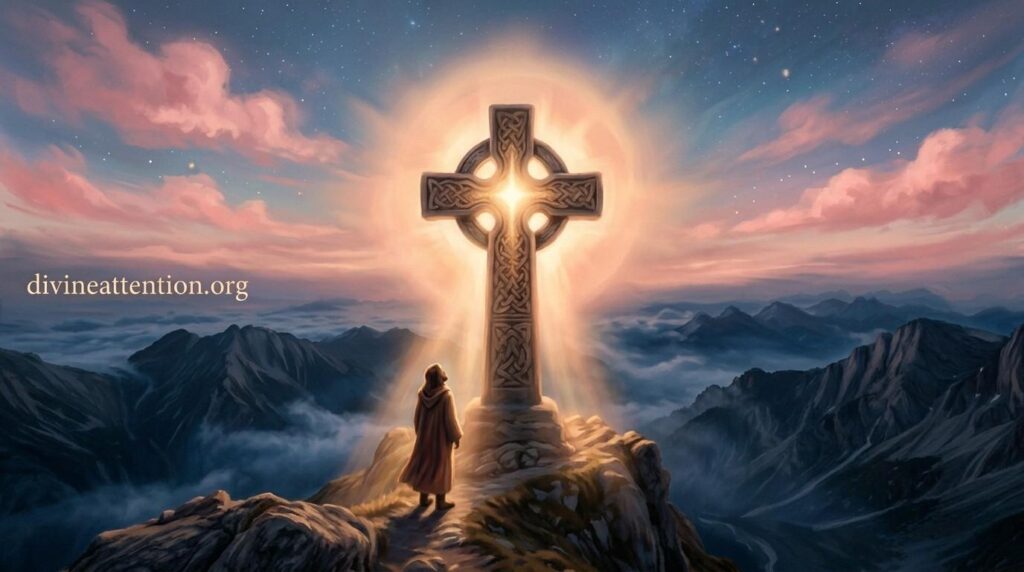
The Depth of God’s Love – It Reaches the Lowest Place
The depth of God’s love is the dimension that most astonishes those who have been in the lowest places of human experience. Because it declares that there is no pit deep enough, no darkness dark enough, and no shame great enough to put a person beyond the reach of God’s love.
The depth of God’s love is measured by the cross. Philippians 2:8 describes Jesus as obedient to the point of death – even death on a cross. The cross was the lowest point of human degradation that Roman culture had invented. It was designed to be maximally humiliating, maximally painful, and maximally public. And God chose it as the demonstration of the depth of His love. The deepest pit of human shame and suffering is where He went. Which means that wherever you have been, God’s love has already been there first.
| “Neither death nor life, neither angels nor demons, neither the present nor the future, nor any powers, neither height nor depth, nor anything else in all creation, will be able to separate us from the love of God that is in Christ Jesus our Lord.” Romans 8:38–39 (NIV) |
Psalm 139:8 says: “If I make my bed in the depths, You are there.” The love of God is not waiting for you at the top, congratulating those who have managed to climb out of their pit. It descends into the pit with you. It sits with you in the darkness. And then it reaches down and pulls you out with a grace that could never have been generated from below.
What God’s Love Changes Practically
It Changes How You Relate to God
1 John 4:18 says: “There is no fear in love. But perfect love drives out fear.” The believer who has genuinely received God’s love does not relate to God out of fear of punishment or condemnation. They relate out of the secure, settled confidence of a loved child approaching a loving Father. Prayer becomes conversation rather than negotiation. Worship becomes response rather than performance. Obedience becomes love returning love rather than earning approval.
It Changes How You See Yourself
The most destructive lie the enemy tells every human being is a variation of this: you are not lovable. You are too broken, too sinful, too ordinary, too much, or not enough. The love of God – when genuinely received – is the most effective antidote to every version of that lie. Because the verdict of God’s love is not based on your assessment of your own worth. It is based on His. And He has said, in the most costly demonstration in history: you are worth the death of My Son.
It Changes How You Love Others
1 John 4:19 is the logical sequence of receiving God’s love: “We love because He first loved us.” The capacity to genuinely love other people – to love the unlovable, to forgive the unforgivable, to extend grace to those who have not earned it – flows directly from the experience of receiving that same love from God. You cannot give away what you have not received. But you cannot keep away what you have genuinely received.
| 🔥 DECLARATION OF RECEIVING GOD’S LOVE SPEAK THIS UNTIL IT MOVES FROM YOUR HEAD TO YOUR HEART I am loved by God! Not because of what I have done but because of who He is. His love is wide enough to include me. Long enough to last forever. High enough to elevate me to the position of His child. Deep enough to reach me wherever I have been. Nothing I have done can separate me from this love. Nothing I could do can earn more of it or lose it. I receive the love of God right now – into the places that have never felt loved, into the wounds that have never been reached, into the identity questions that have never been answered. God loves me. And that changes everything. In the name of Jesus Christ. Amen! |
| CLOSING PRAYER Father, I open my heart to receive Your love right now. Not just as a doctrine but as a present, personal reality. Let the width of Your love remove every sense of exclusion. Let the length of Your love silence every fear of abandonment. Let the height of Your love reconstruct every broken identity. And let the depth of Your love reach every place in my heart that has never felt loved before. Flood those places with the love that surpasses knowledge. Root me and establish me in it so that my whole life becomes a response to having been loved this completely. In the name of Jesus. Amen! |
FREQUENTLY ASKED QUESTIONS ABOUT THE LOVE OF GOD
| If God loves everyone, why does He allow people to go to hell? God’s love is real and universal. But so is human freedom. God does not send people to hell against their will. Hell is the ultimate destination of those who have persistently chosen to reject the relationship with God that His love has made available. C.S. Lewis expressed it powerfully: in the end, there are two kinds of people. Those who say to God: Thy will be done. And those to whom God says: thy will be done. God’s love does not override human freedom. It makes relationship freely available. The rejection of that relationship is a human choice, not a divine verdict. How can God love me knowing everything I have done? Because the love of God is not based on what you have done. Romans 5:8 establishes the sequence: while we were still sinners, Christ died for us. God’s love preceded your repentance. It preceded your conversion. It preceded your entire history. And 1 John 1:9 establishes what happens when a believer confesses sin: God is faithful and just to forgive and to cleanse from all unrighteousness. All. His love does not change when you fail. His forgiveness is as comprehensive as His love. What is the difference between God’s love and human love? Human love is typically conditional, fluctuating, and dependent on the qualities of the person being loved. When those qualities change, the love often changes with them. God’s love is agape – a love of the will, not of the emotions. It does not fluctuate with God’s mood or with your performance. It does not increase when you are spiritual and decrease when you fail. It is a settled, eternal disposition of God toward every human being He has made, demonstrated definitively at the cross and sealed permanently by the resurrection. How do I actually feel the love of God and not just know it intellectually? Romans 5:5 says: “God’s love has been poured out into our hearts through the Holy Spirit who has been given to us.” The experience of God’s love is the work of the Holy Spirit in the inner life of the believer. It is received through prayer – specifically asking God to let you experience His love, not just understand it. It grows through the Word – particularly meditating on the love passages of Scripture until they move from concepts in the mind to realities in the heart. And it is confirmed through community – experiencing the love of God through the love of God’s people. Can anything separate me from the love of God? Romans 8:38–39 is the definitive answer: No. Paul goes through every possible category of separation and declares each one insufficient. Nothing in the present. Nothing in the future. No spiritual being above or below. No circumstance of life or death. Nothing in all creation. The permanence of God’s love is not dependent on the permanence of your faith in any given moment. It is dependent on the faithfulness of God. And God is faithful even when we are faithless (2 Timothy 2:13). How does the love of God relate to God’s holiness and His judgment? God’s love and God’s holiness are not in tension. They are both perfect expressions of His nature. His love motivated Him to provide a way of salvation. His holiness required that sin be dealt with fully and justly. The cross is where both attributes meet perfectly: God’s love provided the sacrifice; God’s holiness accepted it as sufficient payment. The result is that through faith in Christ, a person can stand before a perfectly holy God fully loved and fully forgiven simultaneously. This is what Paul calls the mystery of the gospel: the just and the justifier (Romans 3:26). |
You Are the One He Loves
Zephaniah 3:17 contains what may be the most intimate description of God’s love in the entire Old Testament: “The Lord your God is with you, the Mighty Warrior who saves. He will take great delight in you; in His love He will no longer rebuke you, but will rejoice over you with singing.”
God rejoicing over you with singing. Not tolerating you. Not enduring you. Not watching you with a mixture of love and disappointment. Rejoicing. With singing. That is the picture of the God who loves you. Not a distant, demanding deity waiting for you to perform better. A Father so delighted in His child that He breaks into song.
Receive it. Not just acknowledge it. Not just file it under theological truths you believe. Receive it into the places that have needed it most. Let the width, length, height, and depth of God’s love reach every dimension of who you are. And let what you have received overflow into everything you do.
🔥 Related Prayer Points


| SHARE THIS MESSAGE Share this message with every person in your circles who needs to know how much God loves them. The love of God is the answer to the deepest question every human being is asking. 🔥 Drop a comment below – share how this message has impacted your life! |
Leave a Reply