
What to Do When God Seems Silent
Finding God in the Seasons of Silence
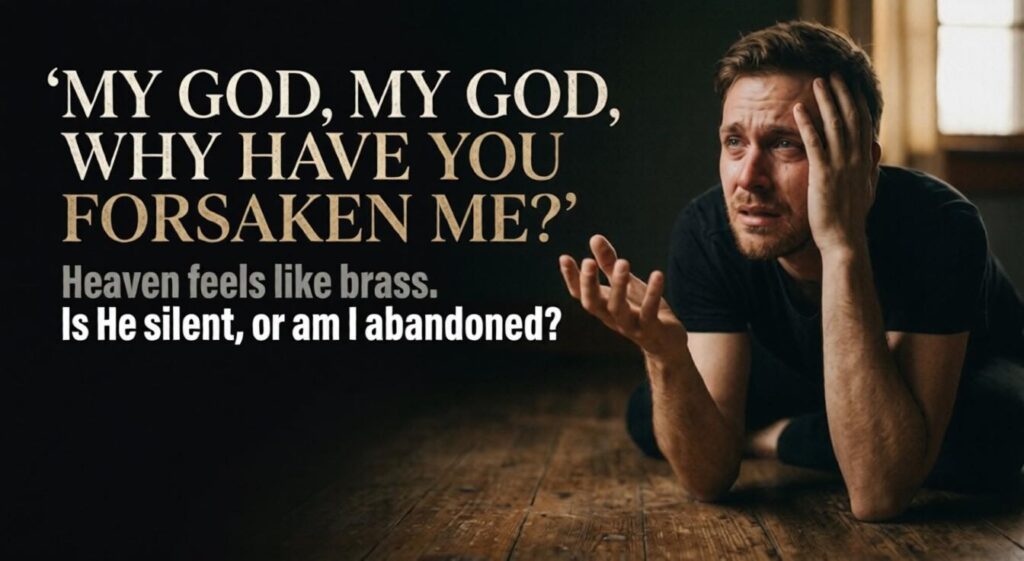
You have been praying. You have been reading your Bible. You have been going to church. And heaven feels like brass. Has God stopped speaking? Has He stepped back? Has your sin finally pushed Him away for good? This sermon is for every believer who has ever asked those questions in the dark.
Psalm 22:1–2 · Habakkuk 1:2 · Isaiah 45:15 · Psalm 46:10 · Job 23:3
| “My God, my God, why have You forsaken Me? Why are You so far from helping Me, and from the words of My groaning? O My God, I cry in the daytime, but You do not hear.” Psalm 22:1–2 (NKJV) |
If you have never experienced a season when God seemed completely silent, you are either in the early stages of your walk with God or you have not yet pressed into the depth of relationship that produces the ache of His apparent absence. Because the silence of God is one of the most consistent and most universal experiences in the entire history of God’s people.
David experienced it. He wrote Psalm 22 from inside it: “My God, my God, why have You forsaken Me? Why are You so far from helping Me?” Those are not the words of an unbeliever. They are the words of the man after God’s own heart, the shepherd-king who wrote more about God’s presence than almost anyone in Scripture, crying out from a season in which God felt completely absent. Job experienced it. Habakkuk experienced it. Elijah experienced it. Even Jesus cried the words of Psalm 22 from the cross.
The silence of God is not a sign of His absence. It is not evidence of His abandonment. And it is not proof of your spiritual failure. Isaiah 45:15 says, with remarkable candour, “Truly You are a God who hides Himself.” The hiding of God is part of God’s nature and God’s method. He is not always loud. He is not always immediately visible. And the seasons in which He is hidden are not wasted seasons. They are often the most formative seasons in the entire journey of faith.
This sermon will help you understand why God sometimes seems silent, what the Bible teaches about those seasons, and most importantly, what you should do while you are waiting for the voice of God to return.
| WHAT THIS SERMON COVERS 1. Key Bible Verses on God’s Silence 2. How to Use This Sermon 3. Part 1 – God’s Silence Is Real – You Are Not Imagining It 4. Part 2 – Why God Sometimes Goes Quiet – 5 Biblical Reasons 5. Part 3 – What God Is Doing in the Silence 6. Part 4 – What to Do While God Seems Silent 7. Part 5 – How to Know When God Is Speaking Again 8. Declaration of Faith in the Silence 9. Closing Prayer 10. FAQ – Questions About God’s Silence |
How to use this sermon: This message is especially powerful for believers going through a spiritually dry season, unanswered prayer, grief, or confusion about God’s direction. Preach it with pastoral sensitivity and close with the declaration so people can speak their faith into the silence rather than collapsing under it.
What Does the Bible Say About God’s Silence?
✔ Psalm 22:1–2 – My God, why have You forsaken Me? I cry but You do not hear.
✔ Habakkuk 1:2 – How long, Lord, must I call for help, but You do not listen?
✔ Isaiah 45:15 – Truly You are a God who hides Himself, O God and Saviour of Israel.
✔ Psalm 46:10 – Be still and know that I am God. Stillness is where He is found.
✔ Job 23:3 – If only I knew where to find Him; if only I could go to His dwelling.
✔ Lamentations 3:25–26 – The Lord is good to those who wait for Him. It is good to wait quietly for the salvation of the Lord.
✔ Isaiah 40:31 – Those who wait on the Lord shall renew their strength.
✔ Psalm 27:14 – Wait for the Lord; be strong and take heart and wait for the Lord.
Part 1: God’s Silence Is Real – You Are Not Imagining It
The first thing this sermon needs to establish is this: the experience of God’s silence is real. It is not a spiritual illusion. It is not evidence of weak faith. It is not a sign that you have somehow imagined your previous encounters with God. The silence is real, the ache is real, and the disorientation it produces is real. And the Bible is full of people who experienced exactly what you are experiencing.
Habakkuk opens his prophetic book not with a vision or a revelation but with a complaint: “How long, Lord, must I call for help, but You do not listen? Or cry out to You, ‘Violence!’ but You do not save?” (Habakkuk 1:2). This is not a lapse of faith. It is the honest cry of a faithful prophet in a season of apparent divine silence and inaction. The book of Lamentations is an entire scroll dedicated to the experience of God’s people in the darkest silence they had ever known. The psalms of lament, which constitute nearly one third of the entire Psalter, are written from inside seasons of silence.
God included all of this in Scripture not to discourage you but to normalise your experience. If you are in a silent season, you are not outside the experience of God’s people. You are standing in a very long and very distinguished line.
Part 2: Why God Sometimes Goes Quiet – 5 Biblical Reasons
God’s silence is never random and never purposeless. Scripture reveals at least five specific reasons why God sometimes withholds the immediate sense of His presence and voice:
1. To Deepen Your Faith Beyond Feelings
The most common reason God withholds the feeling of His presence is to develop a faith that is not dependent on feelings. It is easy to trust God when His presence is tangible, His voice is clear, and His favour is evident. The faith that carries weight – the faith that moves mountains – is the faith that continues to trust when nothing is felt. Hebrews 11 is a list of people who trusted God specifically in seasons when the evidence was absent. God’s silence is often the classroom in which that level of faith is taught.
2. To Call You Into Deeper Intimacy
Paradoxically, the experience of God’s withdrawal often produces a deeper seeking of God than seasons of His manifest presence. When God is obviously present and speaking, the believer can become passively receptive. When He seems absent, the heart that loves Him becomes actively desperate. Song of Solomon 3:1–4 describes the beloved searching for her beloved when he was not found in her bed – and that searching produced the most intimate encounter of the book. The silence creates the hunger that drives you into a deeper seeking.
3. To Produce Patient Endurance
Lamentations 3:25–26 says: “The Lord is good to those who wait for Him, to the one who seeks Him; it is good to wait quietly for the salvation of the Lord.” Waiting is a spiritual muscle that is only developed by being placed in situations where waiting is required. The silent season is not God abandoning you. It is God developing your capacity to trust Him across time – a capacity that is essential for the assignment He is preparing you for.
4. To Create Space for Reflection and Repentance
Sometimes God’s silence is His loving response to a sin, a compromise, or a drift that has not been addressed. Isaiah 59:2 says: “Your iniquities have separated you from your God; your sins have hidden His face from you, so that He will not hear.” This is not punitive abandonment. It is the natural consequence of unrepented sin creating distance in the relationship. The appropriate response is not confusion but honest self-examination, repentance, and return.
5. To Prepare You for What Is Coming
Before every major transition in Scripture, there is often a season of divine silence. Between the Old and New Testaments there were four hundred years of prophetic silence before the voice of John the Baptist broke it. Before Jesus began His public ministry, He spent forty days in the wilderness. Before Joseph’s elevation to prime minister, there were years of silence in the pit and the prison. The silence before a great work of God is not an ending. It is a preparation.
| “Be still, and know that I am God; I will be exalted among the nations, I will be exalted in the earth!” Psalm 46:10 (NKJV) |
What God Is Doing in the Silence
The silence of God is not the inactivity of God. This is perhaps the most important truth to hold onto in a silent season. Just because you cannot hear Him does not mean He has stopped working. Genesis 1 describes the Spirit of God hovering over the dark, formless, silent void before God spoke creation into existence. The hovering preceded the speaking. The preparation preceded the proclamation.
He Is Testing the Roots of Your Faith
James 1:2–4 says: “Consider it pure joy, my brothers and sisters, whenever you face trials of many kinds, because you know that the testing of your faith produces perseverance. Let perseverance finish its work so that you may be mature and complete, not lacking anything.” The silent season is a test not of whether God exists but of whether your faith has developed roots deep enough to survive His apparent absence. Trees that survive storms are trees whose roots have been driven deep by previous adversity.
He Is Stripping Away False Foundations
Many believers build their sense of spiritual security on the experience of God’s presence rather than on the fact of God’s covenant. When the experience fluctuates, their security collapses. The silent season exposes every foundation that is not the Word of God itself and gives the believer the opportunity to rebuild on the only foundation that does not shift with experience. When the silence ends, the believer who has survived it is standing on a much more stable foundation than the one they had before.
| THE TRUTH ABOUT THE SILENCE: John 11:6 records one of the most startling statements in the Gospels: when Jesus heard that Lazarus was sick, He stayed where He was two more days. He did not hurry. He was not absent. He was not indifferent. He was operating according to a purpose that the mourning, confused sisters could not yet see. The silence of Jesus before the resurrection of Lazarus was not inaction. It was the most purposeful pause in the story. Your silent season may be the pause before the resurrection. |
Part 4: What to Do While God Seems Silent
1. Refuse to Interpret the Silence as Abandonment
The most dangerous response to God’s silence is the interpretation that it represents abandonment. Hebrews 13:5 records God’s unconditional covenant: “I will never leave you nor forsake you.” This is not qualified by the condition of feeling His presence. It is absolute. The feeling of God’s absence and the fact of God’s absence are not the same thing. Jesus felt abandoned on the cross (Psalm 22:1, Matthew 27:46) and yet God was present and working the greatest redemptive act in history. Choose the Word over the feeling.
2. Maintain Your Spiritual Disciplines
The temptation in a silent season is to reduce or abandon the very practices that maintain your spiritual receptivity. Do not stop praying because prayer feels like it is bouncing off the ceiling. Do not stop reading the Word because it feels dry. Do not stop attending worship because corporate worship feels mechanical. These disciplines are not just responses to God’s presence. They are the posture that positions you to receive His presence when He returns. Maintain them precisely because the season is silent.
3. Revisit Your Last Clear Word from God
In the silent season, go back to the last thing God said clearly. In 1 Kings 19, Elijah was in a deep silent crisis – exhausted, suicidal, hiding in a cave. God’s instruction was specific: Get up and eat, because the journey is too much for you. Sometimes the word for the silent season is not a new word. It is the faithful execution of the last word you received before the silence began.
4. Be Honest with God About How You Feel
The psalms of lament are God’s permission slip for bringing your raw, honest experience before Him without sanitising it for acceptability. Habakkuk argued with God. Job argued with God. Jeremiah argued with God. David argued with God. Every one of them maintained relationship through the argument. The believer who brings their honest confusion, frustration, and grief to God in prayer is maintaining intimacy even in the silence. The believer who performs spiritual contentment they do not feel is drifting from authentic relationship.
5. Wait Actively, Not Passively
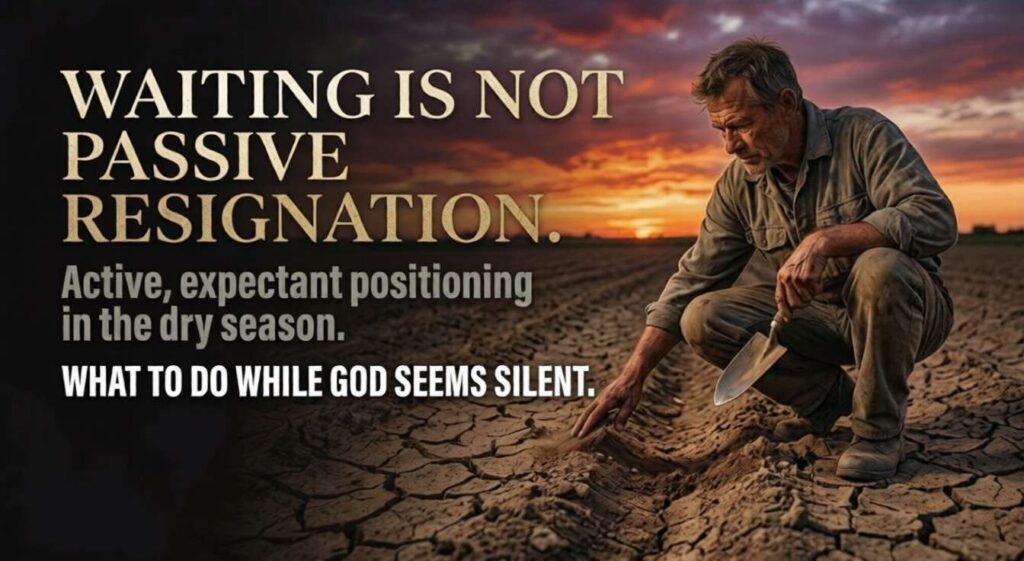
Isaiah 40:31 says those who “wait on the Lord” shall renew their strength. The Hebrew word translated “wait” is qavah – which has the sense of actively twisting or binding oneself to something, like strands being twisted together into rope. Biblical waiting is not passive resignation. It is active, expectant positioning. You wait the way a farmer waits for rain – not doing nothing but continuing to prepare the ground in faith that the rain is coming.
Part 5: How to Know When God Is Speaking Again
When God breaks His silence, it is rarely with drama. 1 Kings 19:11–13 records God sending wind that tore the mountains and an earthquake and fire – and God was not in any of them. Then came a still, small voice. After the storm. After the earthquake. After the fire. In the stillness after all the noise.
God’s returning voice often comes as a gentle renewed interest in the Word – a verse that suddenly comes alive after weeks of dryness. It comes as a quiet assurance in prayer that the channel has reopened. It comes through a specific word from a trusted person that lands with unmistakeable weight. It comes through an unexpected circumstance that speaks directly to the thing you have been waiting on.
The believer who has survived the silence and maintained their posture of seeking will recognise the voice when it returns. Not because it is necessarily loud but because they have been waiting and listening with an attentiveness that the comfortable seasons did not produce.
| 🔥 DECLARATION OF FAITH IN THE SILENCE SPEAK THIS EVERY MORNING UNTIL THE VOICE RETURNS I will trust You in the silence. You have not abandoned me – Your covenant says You will never leave me nor forsake me. I refuse to interpret Your silence as rejection. I refuse to let the absence of feeling override the presence of truth. You are still God. You are still good. You are still working. I maintain my post in prayer, in the Word, and in worship. I am waiting actively and expectantly for Your voice. And when it comes – and it will come – I will be found faithful in the silence. In the name of Jesus. Amen! |
| CLOSING PRAYER Father, I come to You from inside the silence. I will not pretend that it has not been real or that it has not been painful. I bring my honest heart before You. I choose to trust Your covenant over my feelings. I choose to believe that You are working even when I cannot perceive it. Like the disciples in the boat in the storm, I know You are in the boat even when You seem to be asleep. Wake up and speak, Lord. I am still here. I have not run. I have not turned away. I am waiting, I am listening, and I am trusting. In the name of Jesus. Amen! |
| FREQUENTLY ASKED QUESTIONS ABOUT GOD’S SILENCE AND DRY SEASONS Does God’s silence mean He is angry with me? Not necessarily. God’s silence has many possible causes, as this sermon has explored. While unrepented sin can create distance in the relationship (Isaiah 59:2), God’s silence is more often connected to His purposes for your growth, His preparation for your next season, and His deepening of your faith. The most important first response to a silent season is honest self-examination – not guilt-driven panic. Ask the Holy Spirit to reveal any open door of sin and address it. But do not assume the silence is punishment. It is more often preparation. How long do silent seasons typically last? Scripture records silent seasons of varying lengths. The disciples waited ten days between the ascension and Pentecost. David spent years in the wilderness before his kingship. Joseph spent years in prison before his elevation. There is no standard duration. What is consistent is that the silent season ends when its purpose is accomplished in the life of the person experiencing it. The believer’s responsibility is not to shorten the season by spiritual striving but to cooperate with its purpose through faithful waiting, maintaining their spiritual disciplines, and continuing to trust God’s covenant. What is the difference between God’s silence and depression? This is an important distinction that requires pastoral sensitivity. Spiritual dryness and clinical depression can coexist or can be confused with each other. Spiritual dryness is characterised by reduced felt connection to God but the retention of cognitive faith, hope, and functional daily life. Clinical depression often includes persistent sadness, inability to function, hopelessness, and sometimes thoughts of self-harm. If the experience goes beyond spiritual dryness into these clinical markers, both spiritual support and professional mental health care should be sought simultaneously. God works through both. Can I do something to end the silent season faster? The most spiritually productive response to a silent season is to cooperate with its purpose rather than trying to escape it. Increased prayer intensity, fasting, repentance of any identified sin, returning to your last clear word from God, and maintaining consistent spiritual disciplines all create the conditions for God’s voice to return. What does not work is spiritual striving, performance, or the attempt to manufacture the experience of God’s presence through emotional intensity. The silence ends in God’s timing, but the posture of the waiting believer significantly affects how prepared they are to receive what the silence was producing. What do I say to someone who is losing their faith because of God’s silence? Lead them to the lament psalms first – show them that their experience is named, validated, and held within Scripture itself. Then share the theology of the silence: it is real, it is not abandonment, it is purposeful, and it ends. Share the specific examples of biblical figures who experienced it and survived it. Habakkuk’s final chapter is one of the most powerful expressions of faith in the Bible – written by a man who had been arguing with God throughout the first two chapters. Sit with them in the silence. Do not rush to fix it with easy answers. Presence is often more helpful than theology in the acute moment of silence. |
He Has Not Left. He Is Preparing the Resurrection
The shortest verse in the Bible is also one of the most theologically significant: “Jesus wept.” (John 11:35). Jesus stood at Lazarus’ tomb, knowing what He was about to do, and wept. He wept because the grief of the sisters was real, the silence of the previous days had been genuinely painful, and the death before them was genuinely terrible. He did not dismiss the silence or the suffering. He wept in the middle of it. And then He prayed. And then He spoke. And the dead man came out.
Your silent season is not the end of your story. It may be the setup for your resurrection moment. The stone has not been rolled away yet. But the God who rolls stones away has not gone anywhere. He is weeping with you in your grief and preparing to speak into your situation. Hold on. Wait actively. Trust His covenant. The voice will return.
| SHARE THIS MESSAGE Share this with every believer who is going through a dry, silent, seemingly God-absent season. Remind them that the silence of God is not the absence of God. 🔥 Drop a comment below – share how this message has impacted your life. Your testimony will encourage someone else! |
Leave a Reply