
What Does the Bible Say About Hope?
Finding Hope in God’s Word When Life Feels Hopeless
Are you in a season where hope feels like a luxury you cannot afford? Where the disappointments have piled up so high that the idea of things being different feels naive? This Bible study is for you – because biblical hope is not naive optimism. It is the most powerful force in the universe.
Romans 5:5 · Jeremiah 29:11 · Romans 15:13 · Hebrews 6:19 · Lamentations 3:21–23
| “May the God of hope fill you with all joy and peace as you trust in Him, so that you may overflow with hope by the power of the Holy Spirit.” Romans 15:13 (NIV) |
Hope is one of the most searched words on the internet. People search for it in hospital waiting rooms, in the middle of divorces, after job losses, during sleepless nights, and in the quiet moments when life has not turned out the way they planned. The hunger for hope is universal and urgent.
But the hope the world offers is fragile. It is hope based on circumstances: hope that the economy will improve, hope that the diagnosis will be wrong, hope that the relationship will recover, hope that things will somehow work out. This kind of hope is always at the mercy of circumstances and when circumstances deteriorate, this kind of hope collapses.
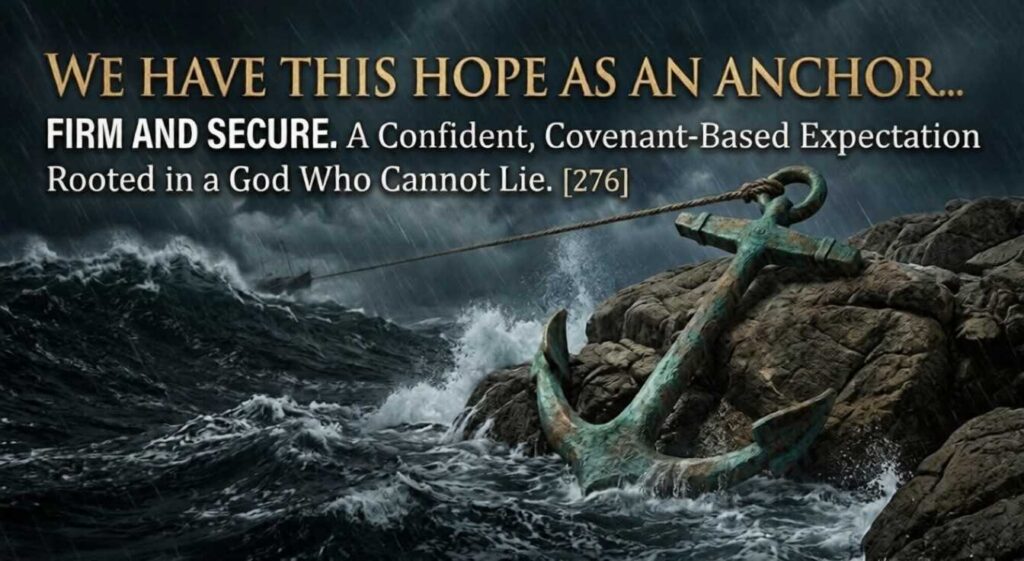
Biblical hope is fundamentally different. Romans 5:5 declares that “hope does not put us to shame, because God’s love has been poured out into our hearts through the Holy Spirit.” The Greek word translated hope in the New Testament is elpis – which carries the meaning of confident expectation. Not wishful thinking. Not optimistic guessing. Confident, covenant-based expectation rooted in the character and promises of a God who cannot lie. That is the hope this Bible study is about.
Walk through this study slowly. Let the scriptures do their work. And by the end, expect the God of hope to fill you with all joy and peace as you trust in Him, so that you overflow with hope by the power of the Holy Spirit.
| WHAT THIS BIBLE STUDY COVERS 1. 20 Powerful Bible Verses About Hope 2. How to Use This Study 3. Part 1 – What Biblical Hope Really Is 4. Part 2 – The Difference Between Biblical Hope and Wishful Thinking 5. Part 3 – Where Hope Comes From 6. Part 4 – What Destroys Hope and How to Protect It 7. Part 5 – 5 Anchors of Hope in the Bible 8. Part 6 – Hope in the Darkest Seasons 9. 15 Bible Verses About Hope to Declare Daily 10. Discussion Questions 11. Declaration of Hope 12. Closing Prayer 13. FAQ – Questions About Hope and Faith |
How to use this study: Walk through one section per day over six days or use it as a complete small-group lesson on hope. Read each scripture aloud before discussing. This study is especially powerful for people going through grief, illness, job loss, or any prolonged season of waiting. End with the declaration spoken corporately.
What Does the Bible Say About Hope?
✔ Jeremiah 29:11 – I know the plans I have for you, declares the Lord. Plans to prosper you and not to harm you. Plans to give you a future and a hope.
✔ Romans 15:13 – May the God of hope fill you with all joy and peace as you trust in Him.
✔ Romans 5:3–5 – Suffering produces perseverance, character, and hope – and hope does not put us to shame.
✔ Hebrews 6:19 – We have this hope as an anchor for the soul, firm and secure.
✔ Lamentations 3:21–23 – This I call to mind and therefore I have hope: His mercies are new every morning.
✔ Psalm 31:24 – Be strong and take heart, all you who hope in the Lord.
✔ Isaiah 40:31 – Those who hope in the Lord will renew their strength.
✔ Romans 8:24–25 – Hope that is seen is not hope at all. We hope for what we do not yet have.
✔ Psalm 42:5 – Why are you downcast, O my soul? Put your hope in God.
✔ 1 Corinthians 13:13 – And now these three remain: faith, hope and love.
✔ Proverbs 13:12 – Hope deferred makes the heart sick, but a longing fulfilled is a tree of life.
✔ Romans 12:12 – Be joyful in hope, patient in affliction, faithful in prayer.
✔ Psalm 147:11 – The Lord delights in those who fear Him, who put their hope in His unfailing love.
✔ 1 Peter 1:3 – God has given us new birth into a living hope through the resurrection of Jesus Christ.
✔ Titus 2:13 – We wait for the blessed hope – the appearing of the glory of our great God and Saviour, Jesus Christ.
✔ Psalm 130:5 – I wait for the Lord, my whole being waits, and in His Word I put my hope.
✔ Colossians 1:27 – Christ in you, the hope of glory.
✔ Psalm 71:14 – As for me, I will always have hope; I will praise You more and more.
✔ Zephaniah 3:17 – The Lord your God is with you. He is mighty to save. He will rejoice over you with singing.
✔ Romans 4:18 – Against all hope, Abraham in hope believed.
Part 1: What Biblical Hope Really Is
The English word hope carries a sense of uncertainty. When someone says “I hope it doesn’t rain,” they mean they desire a particular outcome but are not sure it will happen. The biblical concept of hope is fundamentally different. The Greek word elpis and the Hebrew word tiqvah both carry a meaning closer to confident expectation than to uncertain desire.
Hope Is Confident Expectation Based on God’s Character
Abraham’s faith in Romans 4:18 is described as hoping “against hope” – believing what every natural indicator said was impossible. But the nature of his hope was not emotional optimism. It was confident expectation based on what God had said. Hebrews 6:18 anchors biblical hope in the character of God: God cannot lie. What He has promised, He will perform. Biblical hope is not a feeling. It is a theological position – the decision to stake your expectation on the faithfulness of God rather than on the probability of circumstances.
Hope Is an Anchor, Not a Wish
Hebrews 6:19 uses one of the most vivid metaphors in the New Testament: “We have this hope as an anchor for the soul, firm and secure.” An anchor does not prevent the storm. It does not stop the waves. It does not make the sea calm. What it does is ensure that no matter how violent the storm, the ship does not drift. Biblical hope is the anchor that keeps the soul from drifting into despair, cynicism, and collapse when the waves are at their most violent.
Part 2: The Difference Between Biblical Hope and Wishful Thinking
Wishful thinking is hope that is centred on a desired outcome. Biblical hope is hope that is centred on a trusted Person. This distinction makes all the difference when the desired outcome does not arrive on schedule.
The believers in Hebrews 11 did not receive all that was promised within their lifetimes. Verse 13 records: “All these people were still living by faith when they died. They did not receive the things promised; they only saw them and welcomed them from a distance.” Their hope did not fail when the outcome was delayed because their hope was not primarily in the outcome. It was in God. And God never disappointed them.
| THE TEST OF BIBLICAL HOPE: If your hope is centred on a specific outcome – a specific healing, a specific relationship, a specific circumstance – it will be vulnerable to collapse if that outcome does not arrive. If your hope is centred on God Himself – His faithfulness, His goodness, His covenant, His ultimate plan – it can survive the non-arrival of any specific outcome because the Person your hope is in has not changed. Biblical hope is always primarily hope in God. |
Part 3: Where Hope Comes From
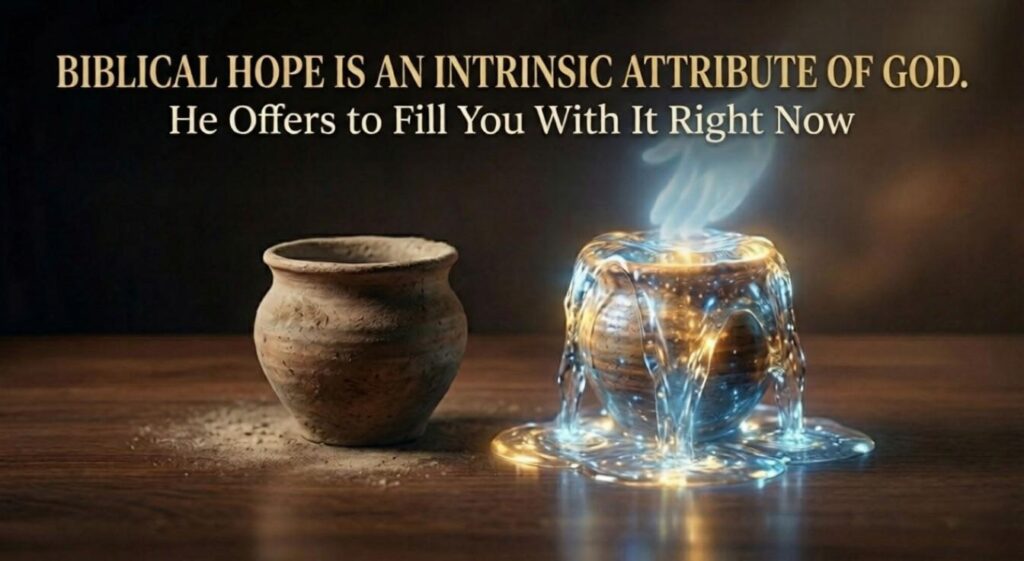
Romans 15:13 calls God “the God of hope” – which means hope is not primarily a human quality that you drum up through positive thinking. It is a divine gift that flows from relationship with the God who is its source.
Hope Comes from the Scriptures
Romans 15:4 says: “For everything that was written in the past was written to teach us, so that through the endurance taught in the Scriptures and the encouragement they provide we might have hope.” The Bible is not primarily a rule book or a history book. It is a hope book. Every account of God’s faithfulness to His people across the centuries is designed to produce hope in the reader who is facing their own impossibility. The God who parted the Red Sea for Moses parts seas for His people still.
Hope Comes Through the Holy Spirit
Romans 15:13 specifies that the overflow of hope comes “by the power of the Holy Spirit.” The Holy Spirit is described in John 14:16 as the Paraclete – the one called alongside to help, to comfort, to strengthen. The work of the Holy Spirit in the believer’s inner life includes the consistent ministry of hope – the supernatural sustaining of confident expectation even when every natural indicator points toward despair.
Hope Is Produced Through Suffering
Romans 5:3‑5 contains one of Scripture’s most counterintuitive statements about hope: suffering produces perseverance, perseverance produces character, and character produces hope. The deepest hope is not produced in easy seasons. It is produced in the seasons that require the most endurance. The believers who carry the most robust, unshakeable hope are almost always those who have survived the most difficult seasons – and discovered that God was faithful through all of them.
| “For I know the plans I have for you, declares the Lord, plans to prosper you and not to harm you, plans to give you hope and a future.” Jeremiah 29:11 (NIV) |
What Destroys Hope and How to Protect It
Proverbs 13:12 names one of the most significant causes of spiritual and emotional collapse: “Hope deferred makes the heart sick.” When something we have hoped for and prayed for and believed for does not arrive in the expected timeframe, a specific kind of spiritual sickness sets in – a slow, creeping erosion of the capacity to hope at all.
Hope Killer 1 – Comparing Your Timeline to Others
Nothing destroys hope faster than comparing the timing of your answer to the timing of someone else’s. God does not operate on a single divine schedule applied uniformly to all people. He works in the specific, unique, sovereign timing of each individual’s story. Joseph’s brothers had their answer within twenty years. Abraham waited twenty-five years for the promised son. The comparison is always the enemy of the faith that sustains hope across extended seasons.
Hope Killer 2 – Defining God’s Faithfulness by Your Circumstances
When circumstances are difficult and prolonged, the temptation is to draw conclusions about God’s faithfulness from the state of the circumstances. Lamentations 3:17–20 records the honest collapse of this kind of hope: “I have been deprived of peace; I have forgotten what prosperity is. My strength and my hope are gone.” But verse 21 is the pivot: “Yet this I call to mind and therefore I have hope.” The recovery of hope was not produced by circumstances changing. It was produced by a deliberate choice to call to mind the character of God.
How to Protect Your Hope
Protecting hope requires daily, deliberate, intentional acts. Read and declare the promises of God specifically over your situation every morning. Rehearse God’s past faithfulness in your own life and in the lives of others. Maintain community with believers who carry hope – hope is contagious in both directions. And choose, as an act of the will, to anchor your hope in the character of God rather than in the probability of your desired outcome
Part 5: 5 Anchors of Hope in the Bible
1. The Character of God
Hope that is anchored in the character of God cannot be destroyed because God’s character does not change. Numbers 23:19: “God is not human, that He should lie, not a human being, that He should change His mind. Does He speak and then not act? Does He promise and not fulfil?” Every attribute of God – His faithfulness, His love, His power, His sovereignty, His goodness – is an anchor for hope.
2. The Promises of Scripture
2 Corinthians 1:20: “For no matter how many promises God has made, they are ‘Yes’ in Christ.” Every promise in the Bible is a specific anchor point for hope. Find the promise that speaks specifically to your situation and anchor your hope to it by daily declaration and prayer.
3. The Resurrection of Jesus Christ
1 Peter 1:3 describes the new birth as a new birth “into a living hope through the resurrection of Jesus Christ from the dead.” The resurrection is the ultimate anchor of hope because it demonstrates that the worst possible outcome – death itself – is not permanent under the power of God. If God raised Jesus from the dead, your situation is not beyond His reach.
4. The Indwelling Holy Spirit
Colossians 1:27 identifies the source of all hope with three words: “Christ in you.” The Holy Spirit, the Spirit of the risen Christ, lives in every believer. The same Spirit that raised Jesus from the dead is present inside you right now, actively ministering hope, strength, and expectation into your spirit.
5. The Testimony of God’s Past Faithfulness
Lamentations 3:22–23 grounds hope in the daily testimony of God’s mercies: they are new every morning. The record of God’s faithfulness in your own past is one of the most powerful anchors for hope in your present. Keep a testimony journal. Review it in seasons of discouragement. What God has done before, He can do again.
Hope in the Darkest Seasons
Lamentations is the most honest book in the Bible about the experience of hope in darkness. It was written by Jeremiah in the immediate aftermath of Jerusalem’s destruction – the worst national catastrophe Israel had ever experienced. And from inside that catastrophe, Jeremiah writes the most quoted passage about hope in all of Scripture:
| “The Lord’s lovingkindnesses indeed never cease, for His compassions never fail. They are new every morning; great is Your faithfulness. ‘The Lord is my portion,’ says my soul, ‘Therefore I have hope in Him.’” Lamentations 3:22–24 (NASB) |
Jeremiah did not write these words from a comfortable place of resolved circumstances. He wrote them from inside the rubble. His city had been burned. His people had been taken captive. The temple had been destroyed. Everything that visibly represented the presence and blessing of God was gone. And from that place – not after it was over but from inside it – he chose to call to mind the faithfulness of God. And that choice produced the declaration that has sustained the hope of God’s people for three thousand years.
Your darkest season is not disqualified from producing the same kind of hope. The darkness does not override the faithfulness of God. His mercies are still new every morning. Even this morning. Even your morning.
15 Bible Verses About Hope to Declare Daily
✔ Jeremiah 29:11 – God has plans for my future and my hope. His plans are good.
✔ Romans 15:13 – The God of hope fills me with joy and peace. I overflow with hope.
✔ Hebrews 6:19 – My hope is an anchor for my soul, firm and secure.
✔ Isaiah 40:31 – I wait on the Lord and renew my strength. I shall not grow weary.
✔ Lamentations 3:22–23 – God’s mercies are new every morning. Great is His faithfulness.
✔ Romans 5:5 – My hope does not put me to shame. God’s love is poured into my heart.
✔ 1 Peter 1:3 – I have a living hope through the resurrection of Jesus Christ.
✔ Colossians 1:27 – Christ in me is the hope of glory.
✔ Psalm 42:5 – I will put my hope in God. I will yet praise Him.
✔ Romans 4:18 – Like Abraham, I hope against hope and believe God’s promise.
✔ Psalm 31:24 – I am strong and my heart takes courage because I hope in the Lord.
✔ Romans 12:12 – I am joyful in hope, patient in affliction, faithful in prayer.
✔ Psalm 130:5 – I wait for the Lord. My whole being waits. In His Word I put my hope.
✔ Proverbs 23:18 – There is surely a future hope for me and my hope will not be cut off.
✔ Romans 8:28 – In all things God works for the good of those who love Him. My story is not over.
| DISCUSSION QUESTIONS – FOR PERSONAL STUDY OR SMALL GROUPS What is the difference between wishful thinking and the biblical concept of hope? How has this distinction affected how you approach prayer and faith? Take time to reflect on where your hope has been anchored – in outcomes or in God Himself. The difference determines how your hope survives delay. In which specific area of your life has hope felt most difficult to maintain? What scripture from this study speaks directly to that area? Identify one specific promise from Scripture and begin declaring it daily over that situation. Lamentations 3:21–23 was written from inside the worst circumstances Jeremiah had ever faced. What does it mean practically to call to mind the faithfulness of God in a dark season? Consider keeping a testimony journal to record God’s past faithfulness as a resource for dark seasons. Which of the five anchors of hope resonates most with where you are right now and why? Spend time this week in the specific scripture connected to the anchor that resonates most with your current situation. Share a testimony of a time when God fulfilled something you had almost stopped hoping for. Your testimony of answered hope is one of the most powerful encouragements available to those around you who are still waiting. What is one daily practice you will begin this week to actively maintain and grow your hope? Make the commitment specific and accountable. Inform a trusted friend or prayer partner of the practice you are committing to. |
| 🔥 DECLARATION OF HOPE SPEAK THIS EVERY MORNING AS YOUR DAILY ANCHOR I am a person of hope! Not wishful thinking – but the confident expectation of a God who cannot fail. My hope is anchored in His character, His promises, and the resurrection of Jesus Christ. I refuse to allow deferred answers to make my heart sick. I choose to call to mind His faithfulness. His mercies are new for me this morning. The God of hope is filling me with joy and peace right now. I overflow with hope by the power of the Holy Spirit. My situation is not beyond His reach. My story is not over. In the name of Jesus Christ. Amen! |
| CLOSING PRAYER Father, I receive the gift of hope today. I anchor my soul in Your character, Your promises, and the resurrection power of Jesus Christ. Where hope has been deferred and my heart has grown sick, I bring that specific area before You now. I call to mind Your past faithfulness. I declare that Your mercies are new this morning for my situation. Fill me with all joy and peace as I trust in You, so that I overflow with hope by the power of the Holy Spirit. My hope is in You – not in outcomes, not in circumstances, not in timelines, but in You. You are the God of hope and You never disappoint. In Jesus’ name. Amen! |
| FREQUENTLY ASKED QUESTIONS ABOUT HOPE AND FAITH What is the difference between hope and faith in the Bible? Hebrews 11:1 connects them directly: “Faith is confidence in what we hope for and assurance about what we do not see.” Hope is the content – what we are confidently expecting. Faith is the substance of that hope – the present-tense conviction that what we are hoping for is real and coming. Hope is the target; faith is the arrow. They work together but are not identical. You can have hope without the active faith that lays hold of it. And faith without hope has nothing to lay hold of. How do I restore hope after a major disappointment? Lamentations 3 is the biblical pattern: acknowledge the reality of the pain and loss honestly before God (vv.17–20), then make the deliberate choice to ‘call to mind’ the character and faithfulness of God (v.21). Restoration of hope after major disappointment is rarely immediate and always involves grief being processed honestly before God rather than suppressed. It also involves surrounding yourself with people who carry hope and can speak it into you when you cannot generate it yourself. And it involves finding the specific scripture that speaks to your specific situation and declaring it daily until faith lays hold of it. Is it spiritually wrong to feel hopeless? Feeling hopeless is not a sin. It is a very human emotional and spiritual experience that many of God’s closest servants have had, including David, Elijah, Jeremiah, and Job. The psalms of lament give the believer full permission to bring those feelings honestly before God. What Scripture calls us to is not the suppression of hopeless feelings but the choice, from within those feelings, to anchor the will and the mind in the faithfulness of God. The battle for hope is always won at the level of what you choose to focus on, declare, and believe – not at the level of how you happen to feel in a given moment. What Bible verse gives the most hope for someone who is suffering? Romans 8:18 is one of the most powerful: “I consider that our present sufferings are not worth comparing with the glory that will be revealed in us.” This verse does not minimise the suffering. It puts it in eternal perspective. Romans 8:28 adds: “In all things God works for the good of those who love Him.” Not some things. Not the good things. All things. Together these two verses create an unbreakable framework for hope in the middle of any level of suffering: the suffering is real, God is working in it, and what it is producing is incomparably greater than what it is costing. How do I pray with hope when I have been praying for years without an answer? Romans 4:18 describes Abraham hoping ‘against hope’ – the phrase suggests a kind of hope that persists beyond the natural reasonable expiration of expectation. The pattern of persistent prayer in Luke 18 (the persistent widow) is Jesus’ specific answer to this question. Continue to pray specifically. Continue to declare the promise. Keep a record of every small evidence of God’s movement, however minor it seems. And in the absence of the specific answer, pray into the goodness and faithfulness of God Himself. The one who prays into God’s character in seasons of unanswered prayer is building a hope that cannot be shaken by the delay. |
The God of Hope Has Not Run Out
Romans 15:13 does not call God “a God who sometimes produces hope in good circumstances.” It calls Him “the God of hope” – making hope an intrinsic attribute of His nature. The God of hope has not run out. He is not rationing it. He is not distributing it based on spiritual performance or the quality of your recent prayer life. He is the God whose very nature is hope, and He is offering to fill you with it right now – all joy and peace, overflowing, by the power of the Holy Spirit.
Your situation has not disqualified you from hope. Your history of disappointment has not exhausted God’s capacity to bring what He has promised. The mercies are new this morning. The anchor is holding. The God of hope is present. And hope – biblical, confident, covenant-anchored, resurrection-guaranteed hope – does not put us to shame.
🔥 Related Prayer Points

| SHARE THIS MESSAGE Share this study with anyone who is struggling to hold on to hope in a difficult season. You may be delivering the anchor they need today. 🔥 Drop a comment below – share how this message has impacted your life. Your testimony will encourage someone else! |
Leave a Reply