
Fasting and Prayer
How to Fast Biblically and See Results
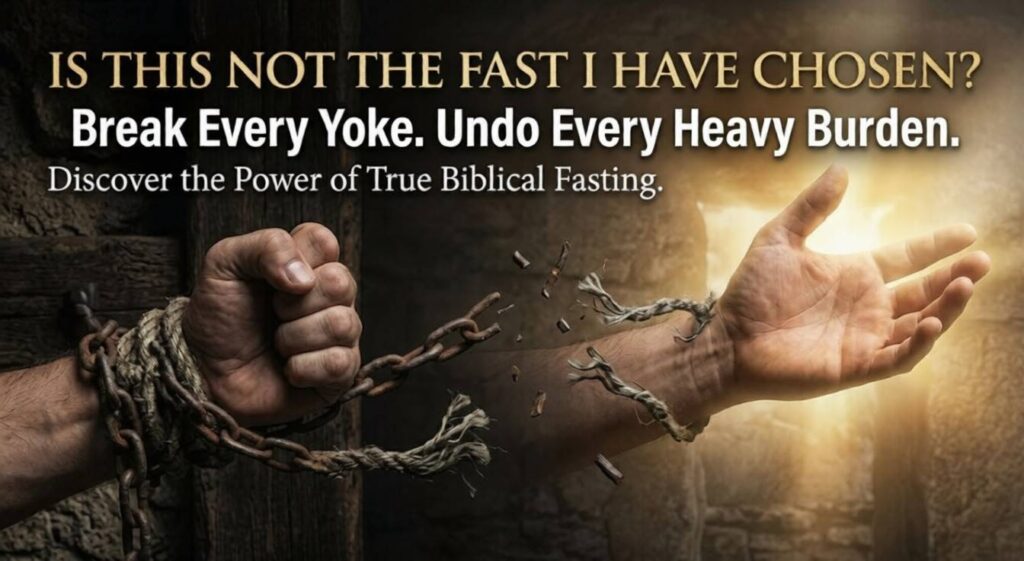
Is your prayer life feeling powerless? Are you believing God for a breakthrough that has not yet come? Fasting combined with prayer is one of the most consistently effective spiritual weapons in the entire Bible – and most believers have barely scratched the surface of its power.
Matthew 6:16–18 · Isaiah 58:6–9 · Joel 2:12 · Daniel 9:3 · Acts 13:2–3
| “Is this not the fast that I have chosen: to loose the bonds of wickedness, to undo the heavy burdens, to let the oppressed go free, and that you break every yoke?” Isaiah 58:6 (NKJV) |
Fasting is one of the most misunderstood and most underused spiritual disciplines in the modern church. Many believers have heard about it. Some have attempted it. Very few have mastered it. And almost none have grasped the full biblical scope of what fasting actually is and what it is designed to do in the life of the believer who practices it consistently and intentionally.
Jesus did not say if you fast. He said when you fast (Matthew 6:16). The assumption embedded in the words of Jesus is that fasting is a normal and expected part of the life of every serious disciple. It is not a spiritual emergency measure reserved for crisis moments. It is a regular spiritual discipline that recalibrates the soul, realigns the will with God, and releases dimensions of breakthrough that prayer alone cannot always produce.
Isaiah 58 is the most comprehensive passage on fasting in all of Scripture. And what it reveals is remarkable: God has a specific kind of fast He has “chosen” – a fast that looses the bonds of wickedness, undoes heavy burdens, lets the oppressed go free, and breaks every yoke. That is not a passive or modest list of outcomes. It is a comprehensive description of supernatural liberation. And it is attached to a single spiritual practice: fasting according to God’s design.
This sermon will take you through the complete biblical theology of fasting – what it is, why it works, the different types of fasting Scripture presents, the mistakes that make fasting ineffective, and the practical steps to beginning a fast that produces the breakthrough God has promised.
| WHAT THIS SERMON COVERS 1. Key Bible Verses on Fasting and Prayer 2. How to Use This Sermon 3. Part 1 – What Biblical Fasting Really Is 4. Part 2 – Why Fasting Works – The Spiritual Mechanics 5. Part 3 – The Different Types of Fasting in the Bible 6. Part 4 – What Isaiah 58 Promises the True Faster 7. Part 5 – Fasting Mistakes That Produce No Results 8. Part 6 – How to Begin Your Fast – 7 Practical Steps 9. Declaration of the Fasting Believer 10. Closing Prayer 11. FAQ – Questions About Fasting and Prayer |
How to use this sermon: Teach this as a standalone message before calling a church fast, or as the first of a three-part series on prayer disciplines. Preach it before your annual January fast, before a major spiritual push, or whenever the congregation needs a fresh encounter with God. Close by issuing a specific fasting challenge.
What Does the Bible Say About Fasting and Prayer?
✔ Matthew 6:16–18 – When you fast, do not be like the hypocrites. Jesus assumes disciples will fast.
✔ Isaiah 58:6–9 – The fast God has chosen looses bonds, breaks yokes, and brings healing.
✔ Joel 2:12 – Return to Me with all your heart, with fasting, weeping and mourning.
✔ Daniel 9:3 – Daniel gave his attention to the Lord God to seek Him by prayer and fasting.
✔ Acts 13:2–3 – While they were ministering to the Lord and fasting, the Holy Spirit said…
✔ Matthew 17:21 – This kind does not go out except by prayer and fasting.
✔ Ezra 8:23 – So we fasted and petitioned our God about this, and He answered our prayer.
✔ Nehemiah 1:4 – When Nehemiah heard of Jerusalem’s condition, he wept, mourned, fasted and prayed.
✔ Esther 4:16 – Fast for me. Do not eat or drink for three days. Then I will go to the king.
✔ Acts 14:23 – Paul and Barnabas appointed elders with prayer and fasting and committed them to the Lord.
What Biblical Fasting Really Is
Fasting, in the biblical sense, is the voluntary abstention from food – and sometimes from other physical pleasures – for a specific spiritual purpose. It is not a hunger strike against God. It is not a demonstration of religious discipline designed to impress others. It is not a method of earning God’s favour through physical suffering. Jesus’ words in Matthew 6 are direct: fasting done for human approval has already received its reward in full, and that reward is a hollow one.
Biblical fasting is the deliberate subordination of the body’s appetites to the priority of the spirit. It is the physical act of saying: right now, the hunger of my spirit for God is more urgent and more important than the hunger of my body for food. That is the posture that fasting creates. And that posture – that deliberate orientation of the whole person toward God – is precisely what produces the spiritual outcomes that Scripture associates with fasting.
Fasting Is Not About the Food
This is perhaps the most important thing to understand about fasting: the power is not in the not-eating. There is nothing inherently spiritual about an empty stomach. The power is in what the not-eating does to the spirit. It creates space. It sharpens spiritual sensitivity. It breaks the cycle of feeding the flesh’s appetites and turns the whole person’s attention to God in an intensity that normal prayer rarely achieves.
| THE FOUNDATION OF FASTING: Isaiah 58:5 records God asking directly: “Is this the kind of fast I have chosen, only a day for people to humble themselves? Is it only for bowing one’s head like a reed and for lying in sackcloth and ashes?” God is distinguishing between the form of fasting – the external, visible, physical act – and the substance of fasting – the genuine humility, repentance, and orientation toward Him that the physical act is supposed to express. The form without the substance produces nothing. The substance expressed through the form produces everything Isaiah 58 promises. |
Why Fasting Works – The Spiritual Mechanics
Understanding why fasting works helps you fast with targeted faith rather than vague hope. Scripture reveals at least four specific spiritual dynamics that fasting activates:
1. Fasting Humbles the Soul Before God
Psalm 35:13 records David saying “I humbled myself with fasting.” The connection between fasting and humility is consistent throughout Scripture. James 4:6 promises that God gives grace to the humble. Daniel 9 records perhaps the most dramatic answered prayer in the Old Testament – triggered by Daniel’s fasting and humiliation before God. The fast creates the condition of humility that activates God’s grace.
2. Fasting Sharpens Spiritual Sensitivity
When the body’s appetites are deliberately subdued, the spirit’s sensitivity to God’s voice, God’s presence, and God’s direction increases. It is not that God speaks more loudly when you fast. It is that the noise of the flesh’s competing demands is reduced, making God’s voice clearer. Acts 13:2 records the Holy Spirit speaking specifically and directively while the early church was fasting. The fast created the spiritual atmosphere in which God’s specific direction could be received.
3. Fasting Releases Spiritual Power Over Darkness
Matthew 17:21 records Jesus explaining that a particular category of demonic bondage “does not go out except by prayer and fasting.” This is one of the most significant statements about spiritual warfare in the New Testament. It establishes that there are levels of demonic resistance that ordinary prayer does not dislodge. Fasting combined with prayer releases a dimension of authority that bypasses those resistance levels.
4. Fasting Aligns Your Will with God’s
Joel 2:12 records God calling His people to return to Him with fasting. The fast is a physical enactment of the internal return – the deliberate turning of the whole person’s will, appetite, and direction back toward God. In seasons where the believer has drifted – in prayer, in Word engagement, in spiritual vitality – fasting is one of the most effective realignment tools available. It does not just ask God to change circumstances. It changes the one who is praying.
| “However, this kind does not go out except by prayer and fasting.” Matthew 17:21 (NKJV) |
The Different Types of Fasting in the Bible
The Bible does not prescribe a single, universal format for fasting. Different situations in Scripture called for different expressions of fasting. Understanding these types helps you choose the fast that is appropriate to your specific spiritual assignment:
1. The Normal Fast – Abstaining from All Food
The most common biblical fast involves abstaining from all food while continuing to drink water. Jesus fasted forty days and forty nights in the wilderness (Matthew 4:2). Moses fasted forty days on Mount Sinai without food or water – a supernatural fast sustained by God’s direct presence (Deuteronomy 9:9). The normal fast is the standard starting point for most believers.
2. The Partial Fast – The Daniel Fast
Daniel 1:12 records Daniel and his three friends eating only vegetables and drinking only water for ten days. Daniel 10:3 records Daniel abstaining from choice food, meat, and wine for twenty-one days. This partial fast – restricting specific foods rather than all food – is one of the most widely practiced forms of fasting in the modern church and has produced significant breakthrough results across many accounts.
3. The Absolute Fast – No Food or Water
Esther 4:16 records Esther calling for a three-day absolute fast – no eating or drinking. Acts 9:9 records Paul going three days without food or water after his Damascus road encounter. The absolute fast is reserved for extraordinary spiritual emergencies and should not exceed three days without specific divine direction and physical caution.
4. The Corporate Fast – The Community Fasts Together
Joel 2:15–16 records God calling for a communal fast: “Blow the trumpet in Zion, declare a holy fast, call a sacred assembly.” Acts 13:2–3 records the early church fasting together when they received the direction for Paul and Barnabas’ first missionary journey. Corporate fasting multiplies the spiritual intensity of individual fasting. When a whole congregation or family fasts together for the same specific purpose, the combined spiritual authority released is extraordinary.
What Isaiah 58 Promises the True Faster
Isaiah 58:6‑9 is God’s most specific description of the outcomes that genuine fasting produces. These are not vague spiritual improvements. They are specific, tangible, covenant promises attached to the true fast:
✔ To loose the bonds of wickedness – fasting breaks demonic strongholds that have been binding the faster or those they are interceding for.
✔ To undo heavy burdens – the crushing weights that have refused to lift under ordinary prayer yield to the authority released by fasting.
✔ To let the oppressed go free – fasting releases liberation for those trapped in cycles of bondage that have resisted other forms of prayer.
✔ To break every yoke – not some yokes. Every yoke. Fasting is God’s prescribed method for comprehensive spiritual liberation.
✔ Then your light shall break forth like the morning (v.8) – clarity, direction, and the manifestation of God’s presence follow genuine fasting.
✔ Your healing shall spring forth speedily (v.8) – accelerated physical healing is specifically promised to the true faster.
✔ Then you shall call and the Lord will answer (v.9) – enhanced prayer effectiveness is a direct covenant outcome of biblical fasting.
Fasting Mistakes That Produce No Results
Matthew 6:16–18 reveals that fasting can be done in a way that produces zero spiritual result. Here are the most common fasting mistakes that nullify the power of the fast:
Fasting for Appearance Rather Than for God
Jesus’ primary warning in Matthew 6 is against using fasting as a public performance – doing it to be seen, respected, or admired by others. This kind of fasting has already received its full reward in the form of human admiration. It has no account with God. True fasting is done “to your Father who is in secret, and your Father who sees in secret will reward you openly” (Matthew 6:18).
Fasting Without Prayer
Fasting without intentional, focused prayer is simply dieting. The fast is the vehicle. Prayer is the engine. A fast without concentrated, deliberate, specific prayer attached to it will produce physical hunger but no spiritual breakthrough. Every biblical fast is consistently connected to specific, focused prayer for a specific purpose.
Fasting While Maintaining Injustice
Isaiah 58:3‑5 records God’s direct rebuke of Israel’s fasting: they fasted and prayed while simultaneously exploiting their workers, quarrelling, and striking each other. God said explicitly: “Is this the kind of fast I have chosen?” Fasting is not a spiritual bypass for unrepented sin, unresolved injustice, or maintained unforgiveness. The fast that Isaiah 58 describes includes specific social and relational righteousness: sharing food with the hungry, clothing the naked, not turning away from your own flesh and blood (v.7).
| THE MOST EFFECTIVE FAST: The fast that changes everything is the one that combines physical abstention from food, concentrated prayer with specific requests, genuine humility and repentance before God, and practical righteousness in relationships. When all four elements are present, the outcomes Isaiah 58 describes are consistently produced in the experience of believers across every generation and tradition. |
How to Begin Your Fast – 7 Practical Steps
1. Define Your Purpose Before You Begin
The most effective fasts have a clear, specific reason. Before you fast, identify exactly what you are faying for and why fasting is the appropriate response. Write it down. The more specific your purpose, the more targeted your prayer during the fast and the more clearly you will recognise the answer when it comes.
2. Choose the Right Type and Duration
Begin with what is realistic for your health and spiritual experience level. A one-day normal fast is more effective than a three-day fast you abandon on day two. If you are new to fasting, begin with a partial fast or a one-meal fast and build. If you have health conditions that affect how you eat, consult your doctor before fasting from food entirely.
3. Prepare Your Body and Schedule
Begin reducing food intake one to two days before your fast. Clear your schedule of unnecessary activities and appointments that will compete with prayer time. The fast without prayer time is just hunger. Block specific prayer windows into your day – morning, midday, and evening at minimum.
4. Fill the Empty Hours with the Word and Prayer
Every hour you would have spent eating is now available for prayer and the Word. Do not fill those hours with entertainment, social media, or idle activity. Fill them with the specific prayers connected to your fast’s purpose. Read the scriptures that speak directly to what you are believing God for.
5. Pray Specifically and Persistently
Daniel 9:3–19 records one of the most specific, comprehensive, persistent prayers in Scripture – delivered during a fast. Daniel did not pray vaguely. He named the situation, acknowledged the sin, appealed to God’s covenant character, and asked for specific outcomes. Model your fasting prayer on this pattern: honest, specific, covenant-based, and persistent.
6. Break the Fast Wisely
How you end your fast matters physically. Breaking a long fast with heavy food immediately can cause physical distress. Begin with small amounts of easily digestible food – fruits, soups, light meals. Honour the body’s need for gentle re-entry while maintaining the spiritual posture that the fast established.
7. Record What God Says and Does
Keep a fasting journal. Record your prayers, the scriptures God highlights, any impressions or directions you receive, and the answers that come. Your fasting journal becomes a testimony record that builds faith for future fasts and demonstrates the faithfulness of God to those who practice this discipline consistently.
| “Then you shall call, and the Lord will answer; you shall cry, and He will say, ‘Here I am.’” Isaiah 58:9 (NKJV) |
| 🔥 DECLARATION OF THE FASTING BELIEVER I FAST IN SECRET AND MY FATHER REWARDS ME OPENLY I choose to fast and pray according to God’s design. I humble myself before the Lord through fasting. I loose the bonds of wickedness, undo heavy burdens, and break every yoke over my life through the power of fasting and prayer. As I fast, my light breaks forth, my healing springs up speedily, and my God answers when I call. I am not weakened by this fast. I am empowered by it. The God who saw Daniel’s fast, Esther’s fast, and the early church’s fast sees mine. And He will reward me openly. In the name of Jesus Christ. Amen! |
| CLOSING PRAYER Father, I come to You as one who desires to seek You with all my heart. I choose the fast You have designed – not for appearance, not out of duty, but out of genuine hunger for Your presence and genuine faith in Your promises. As I fast and pray, loose every bond in my life and in my household. Undo every heavy burden. Break every yoke. Let my light break forth and my healing spring up speedily. When I call, answer me. When I cry, say ‘Here I am.’ I combine the weapon of fasting with the weapon of prayer and I expect the breakthrough that Your Word has promised. In the name of Jesus. Amen! |
| FREQUENTLY ASKED QUESTIONS ABOUT FASTING AND PRAYER Is fasting in the New Testament or is it only an Old Testament practice? Fasting is firmly established in both Testaments. Jesus fasted forty days before beginning His ministry (Matthew 4:2), taught on fasting as a normal disciple’s practice (Matthew 6:16–18), and referenced fasting as the appropriate response to certain levels of demonic resistance (Matthew 17:21). The early church fasted before major decisions and ministry appointments (Acts 13:2–3, Acts 14:23). The New Testament does not command a specific fasting schedule, but it assumes fasting as a normal spiritual discipline of the serious believer. Can I fast from things other than food? Yes. The principle of fasting is the voluntary abstention from a legitimate pleasure for a spiritual purpose. Some believers fast from social media, entertainment, television, or other activities that compete with their prayer focus. While these practices can be spiritually valuable, they are distinct from the biblical food fast that Scripture specifically describes and promises specific outcomes to. Both are legitimate spiritual disciplines but they should not be confused – abstaining from social media is not the same as the Isaiah 58 fast. What if I have a health condition that prevents me from fasting from food? Fasting must be practiced wisely. Diabetics, pregnant women, those with eating disorders, and people on certain medications should consult their doctors before fasting from food. A partial fast, a modified fast, or a non-food fast may be more appropriate in these situations. God looks at the heart and the intent. A believer who genuinely cannot fast from food for medical reasons can still engage in the spirit of fasting – the deliberate, intensive turning of the whole heart toward God in prayer, combined with abstaining from non-essential activities. How long should a fast last? Scripture records fasts of one day (Judges 20:26), three days (Esther 4:16), seven days (1 Samuel 31:13), twenty-one days (Daniel 10:3), and forty days (Matthew 4:2). The appropriate length depends on the purpose, the guidance of the Holy Spirit, and the physical capacity of the person fasting. For most believers beginning a regular fasting practice, one day per week or one to three days for a specific purpose is a healthy starting point. Extended fasts should be undertaken with specific divine direction, spiritual oversight, and physical wisdom. Why do I not always see immediate results when I fast? Daniel 10:12–13 reveals that Daniel’s prayer was answered immediately in the heavenly realm but was delayed in the earthly realm by spiritual resistance for twenty-one days. His persistence in fasting and prayer was the factor that enabled the breakthrough to arrive. Not all answers to fasting prayer are immediate. Some require sustained, persistent fasting over time. The absence of immediate visible results is not evidence that the fast has been ineffective. It may be evidence that the breakthrough is in process and persistence is required. Can I fast for someone else’s breakthrough? Yes – intercessory fasting is one of the most powerful expressions of this discipline. Nehemiah fasted and prayed for his people (Nehemiah 1:4). Moses fasted and interceded for Israel (Deuteronomy 9:18–20). Esther fasted for her people’s deliverance (Esther 4:16). You can fast specifically for a family member’s salvation, a loved one’s healing, a marriage in crisis, or a ministry assignment. Intercessory fasting positions you to carry the spiritual weight of another person’s situation before God with an intensity that changes the spiritual atmosphere around their life. |
The Fast That Changes Everything
Jesus said “when you fast” not “if you fast.” The assumption of the Kingdom is that His disciples will fast. Not because fasting earns anything. Not because God is waiting to be impressed by your hunger. But because fasting is one of the most consistently reliable ways to position the whole person – body, soul, and spirit – in the complete surrender and focused seeking that produces breakthrough.
Isaiah 58 is still in effect. The fast God has chosen still looses bonds, still breaks yokes, still releases healing, and still produces the open heaven where He answers before you finish calling. The question is not whether it works. The question is whether you will practice it. Choose your fast. Set your purpose. Combine it with prayer. And expect the God of Isaiah 58 to do exactly what He promised.
🔥 Related Prayer Points


| SHARE THIS MESSAGE Share this message with every believer in your circle who is in a season of spiritual stagnation, unanswered prayer, or persistent spiritual attack. The weapon of fasting may be exactly what they need to turn the tide. 🔥 Drop a comment below – share how this message has impacted your life. Your testimony will encourage someone else! |
Leave a Reply